

(Note: this essay builds upon this one.)
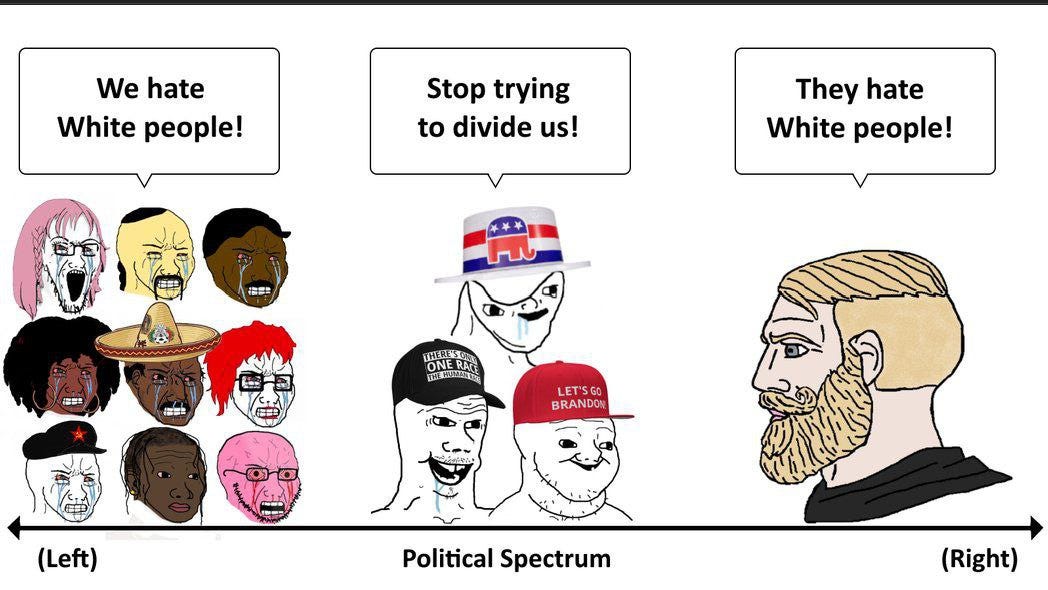
Blacks defend black murderer Karmelo Anthony. Moderate Muslims defend hardcore Muslims. Moderate leftists defend extreme leftist professors, writers, journalists, bomb-throwers, vandals, rioters, murderers and even terrorists.
Groups defend their radical fringes because they understand that the radical fringe is a bulwark against the enemy as well as a snow-plough clearing ground so that moderates can seize it. In addition, protecting the radicals is beneficial for reasons of morale, solidarity, not showing weakness or kowtowing to the enemy, etc. Therefore, every group prizes and protects its radicals.
Every group, that is, except White conservatives. They have a completely different strategy: disavow their radicals in order to gain their enemy’s approval, endorsement and friendship. This is the “people pleaser” approach, and indeed it does please people, because it puts the conservative in the losing position and enables his enemy to walk all over him. (Whenever one hears about a conservative politician who behind closed doors really enjoys getting whipped or otherwise humiliated, it seems to just make sense. It makes sense that Tim Stanley, who condemns right-wing radicals as Nazis, calls Kemi Badenoch “mummy”.)

The general public don’t want to follow radicals, because they associate being radical with being unstable, weak and unreasonable. They associate being moderate with being stable, strong and reasonable. But the key thing for them is not moderation - which is arbitrary and changes with the times - but the other attributes which are seen to go with it. They follow a moderate not because his ideas are bland, but because he is stable, strong and reasonable - “a safe pair of hands”. What they want is not just stability, but direction that will not swerve, not err or falter, not lead them off a cliff.
If you, as a politician, have radical ideas but nevertheless seem stable, strong and reasonable, the public will take you seriously. Of course, your enemy will do everything they can to obstruct this. They will first emphasise how radical your ideas are. If that fails, because the public have an appetite for change, they will switch to emphasising the other traits, trying to get the public to see you as unstable, weak and unreasonable. Funnily enough, “unstable and weak” can be achieved by getting you to disavow people on your own side. This could be because the individuals are corrupt, sleazy, under-qualified… or because they are more radical than you. If you disavow them, you admit that you had bad judgement in associating with them in the first place, and you show yourself as a people-pleaser who lacks the strength to stand by his principles and his allies. Your enemy wants you to disavow your radicals because doing so makes you look bad.
Far from winning you some peace, it disrupts things on your side. Now you have to deal with tumult in the ranks - your supporters feeling demoralised because you have started disavowing people, your allies unsure which of them will be next, everyone wondering whether some other leader would be less of a push-over.
Meantime, having done what your enemy demanded, of course you have not won his approval. He moves straight on to the next demand. The point of holding you responsible for the radicals is to persuade you to kill your own cause. You end up literally doing your enemy’s work for him.
We on the Right have to start playing to win, not seeking our enemy’s approval. There is no placating people who want you extinct. And be in no doubt, that is absolutely what they want. So, invoking your attachment to morality and principles, and using your decency against you, they invite you to castrate your own side.
Now, of course there are objectionable ideas and people on the Right (as anywhere). But you don’t need to attack them or counter-signal them. I won’t say categorically that you should have “no enemies to the right” - good luck with that! - but that you should avoid cutting them loose. Most of the time, you can simply ignore them.
A high tide raises all ships. Instead of attacking someone you deem not good enough, elevate someone you deem better.
Social class comes into this. On the Left, radicals tend to be middle-class, university-educated, idealistic, and full of self-regard. But on the Right, radicals tend to be working-class. This is a vector of attack. The enemy will point out how uncouth the radical is, how lacking in finesse and nuance, how uneducated, boorish or unpleasant he might be. All of those accusations might hold, and yet what the radical is saying remains true. And even if not, to be cold about this, the radical remains strategically useful.
Often, the purpose of the radical is not that he identifies end goals, but that he maximises the ground the enemy has to fight to secure. When you as a moderate concede ground from the off by disavowing your radicals, you reduce your enemy’s workload and reduce your possible win before the fight has even started! Now, you might think this helps you because it makes you appear reasonable, moral, etc. Your enemy doesn’t care about those things. If he cared about morality, he wouldn’t be demonising you for objecting to the Great Replacement or trying to secure the existence of your ethnic group.
Of course we should be reasonable and humane - but by the standards of the public, not of our enemies. If someone on your side is too extreme, maybe privately suggest they calm down their rhetoric so as not to give the enemy an easy win. However, never publicly disavow them except as an absolute last resort. Not only does it inflame egos leading to reprisals and resentment all round, more importantly it demoralises your side (yes, because people are human) and hands a win to your enemy by showing there is division on your side, something he can stoke and exploit.
Perhaps most fundamentally, a man who continually disavows his own side is seen by the public as a man who is weak and/or has bad judgement.
When one of your radicals (let’s call him “Ronald”) is in the news for some controversial thing he has said or done, you might not need to say anything at all. Simply letting your enemy bluster impotently might be the winning move for you. However, we should not imagine that we too enjoy the privileged position of the Left, namely that the media is on our side and won’t hold our radicals against us. Sometimes things do need to be addressed. Should you be quizzed about Ronald, here is how to respond:
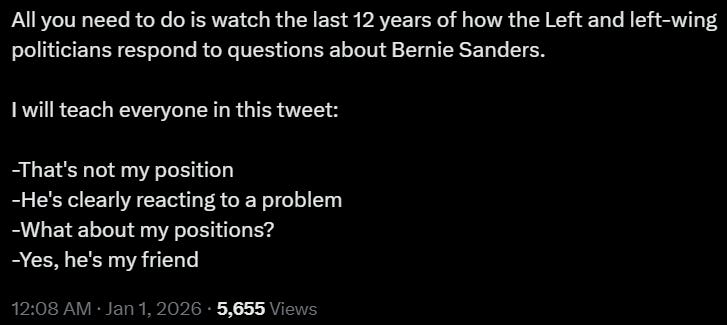
Let’s go through each of these.
“That’s not my position.”
This differentiates you from Ronald without disavowing him, and also makes your enemy look incompetent. You could even mock your enemy for stupidly equating you (a moderate) with a radical and ask why he is wasting your time with this misapprehension.“He’s clearly reacting to a problem.”
With these words, you re-cast Ronald’s “radical” position as understandable, emerging not from evil intent but from real life, but you do not justify it and thus create burdens for yourself. You are showing sympathy with Ronald (which emboldens your side) without embracing his position. The word “clearly” makes this seem obvious, common sense, and thus makes your enemy look stupid.“What about my position?”
This switches you from defensive to pro-active. You are controlling the discourse instead of letting your enemy do so. (And after all, why is your enemy talking to you if not to learn your position…? Surely it’s not just a sly vindictive effort to get you to disavow a friend…?)“Yes, Ronald is my friend.”
This puts you on top, seizing dominance from your enemy. It demonstrates spine, courage and solidarity (which will energise your side) and shows there is not a schism that your enemy can exploit. You have differentiated yourself from Ronald but are not pathetically terrified of being associated with him. This deprives your enemy of all options but to listen to your “more reasonable” position.
In short: undermine your enemy, not your radicals.
And you should always do this, even when you disagree with the radicals or think their ideas impractical. Why? Because the radicals are on your side while your enemy is not. They have your back, your enemy doesn’t. This really is zero-sum, friend/enemy, power politics, black/white, etc. There is unlikely to be much “reasonable common ground” you can find with an enemy whose worldview is diametrically and implacably opposed to your own.
And even if there is some common ground, be careful about pursuing it. The nuances of morality and truth are much less important than attaining power. Without power, you cannot advance morality or truth anyway.
"Radical" is a purely subjective term. Radicalism becomes conservatism after it's been around a while. I remember the communist hardliners in the USSR were called "conservative." I learned then that it doesn't mean anything like what the libtards pretend to think it means.
Woke leftist libtards don't use language to inform or communicate thoughts, or ideas, they only use words for rhetorical purposes, as weapons of mass manipulation and gaslighting.
Conservatives long for the vanished, genteel world, for civilised debate, lifelong friendship between political opposites, tea and cake. It's lovely but the instinct to seek common ground, to pre-emptively concede, to offer Battenberg cake to a fiery rival, is as out of place now as it would have been in Russia in 1917. Gentility is now taken as weakness, and disavowing one's radicals is akin to a wartime army closing down its special operations units because they "scare" HR. We are at war already, we need wartime consiglieri.