


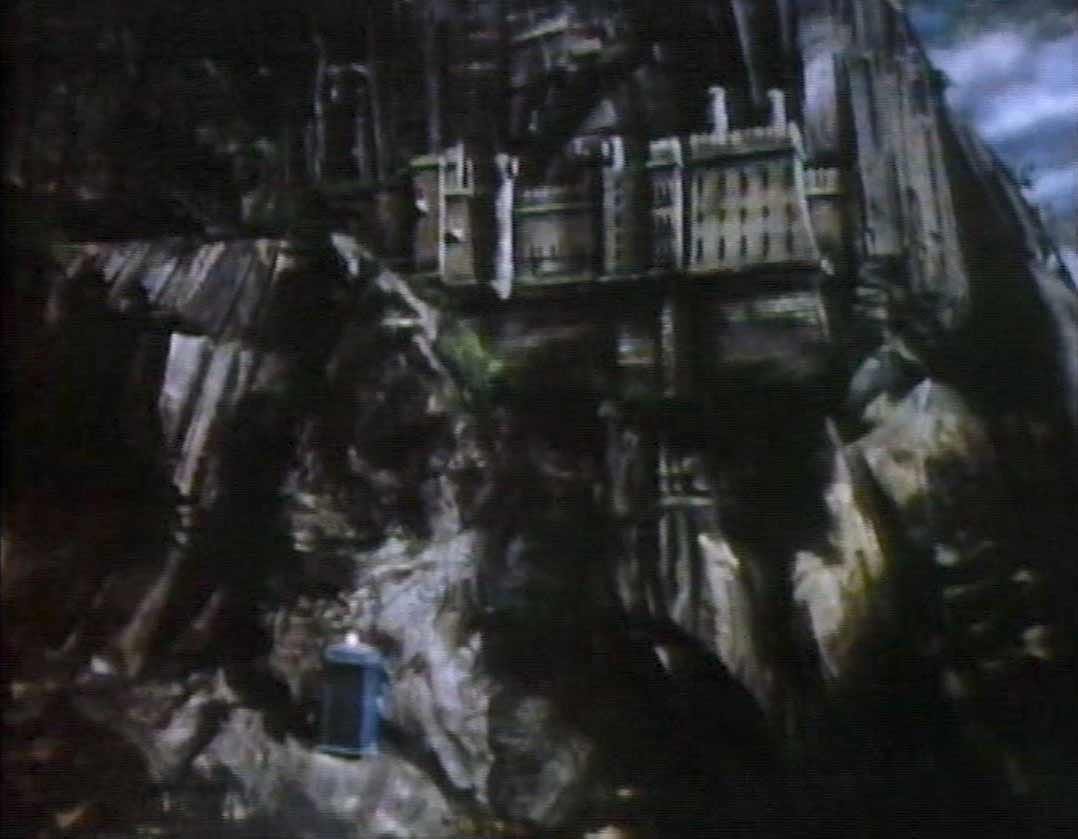
This story sees the rulers of Peladon, a backward and unimportant planet, contemplating whether to join “the Galactic Federation”.
After much debate in Parliament and the media, Britain joined the EEC (which evolved into the European Union) when Ted Heath signed the Treaty of Accession on the 22nd of January 1972. Just seven days later, The Curse of Peladon began broadcasting. Given the sheer temporal proximity, the story must be seen as a meditation on this real-world issue.
Moreover, since a great percentage of the British public opposed joining the EEC, it is an attempt by educated liberals to persuade them. But, as is often the case with allegorical drama, the persuasion is done dishonestly. The fictional setting allows for key facts to be twisted, replaced or omitted altogether, and thus, a fallacious argument to be constructed.
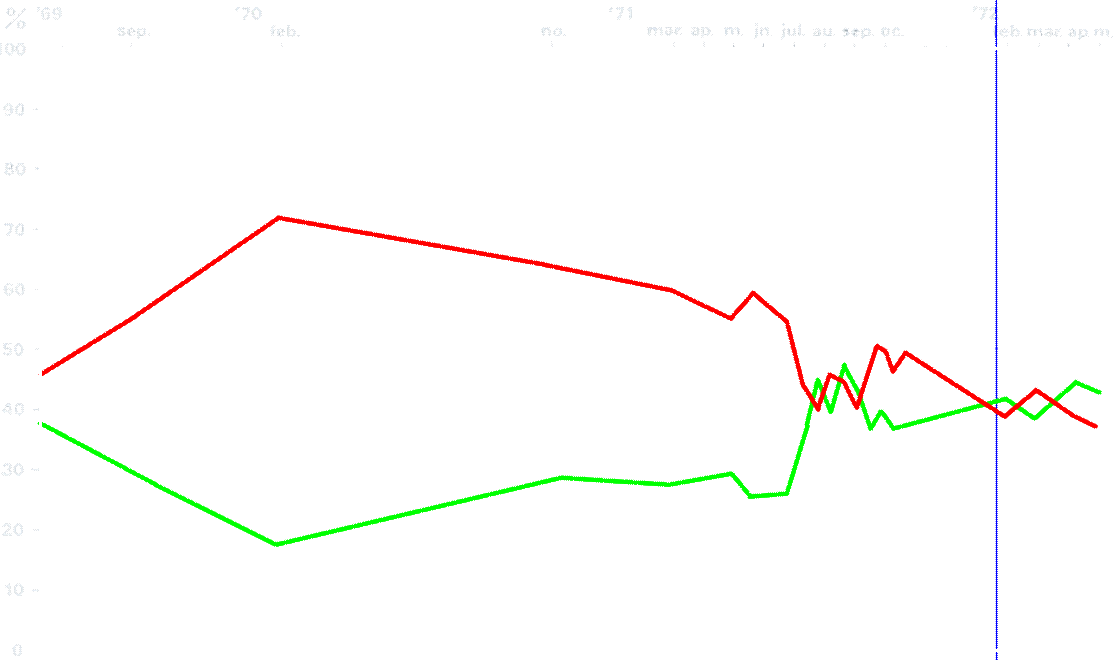
Coming from the mind of a writer, any story is bound to have “a perspective”. That is fine. I have no objection to the storyteller’s concerns being apparent in the stories he tells; drama would be very dull if it had to be strictly impartial on everything. However, there are two caveats. I would prefer if the BBC employed storytellers with a range of perspectives, not just liberals! Doctor Who viewers never got a story which showed “the other side” of this issue.
The second caveat is that a story should make some attempt at even-handedness, especially when it is for the general public and even more so when large numbers of children will be watching. The Curse of Peladon is certainly not even-handed. While purportedly a meditation on cooperation and federation, it ends up being a full-throated defence.
It is also not honest or fair, since Peladon differs from Britain in very relevant ways. Whatever the country, any fair treatment would take its peculiarities into account. Instead, Britain is distorted out of recognition in The Curse of Peladon. Just as the barbarian has to be elevated so that colonising him seems bad, a great country has to be diminished so that federating it seems good.
Well within living memory in 1972, Britain had been the world superpower. Thus, when its avatar here is a “somewhat primitive planet” which is lucky to be offered a chance by more advanced planets, the narrative is wildly off-the-mark. Britain was not in any way primitive compared to the other countries in the EEC; indeed it was as advanced as any, merely facing economic problems.
Then there is the character of the EEC itself, separate from its “member states”. The Galactic Federation is described exactly as the EEC (and EU) describes itself: a force for good, rationality, progress, efficiency, and benign cooperation. But what if the EEC is actually willing to destroy its “member states” in pursuit of a technocratic dream? This isn’t mentioned.
However, opposition to joining the Federation is mentioned, and linked explicitly with superstition and fear.
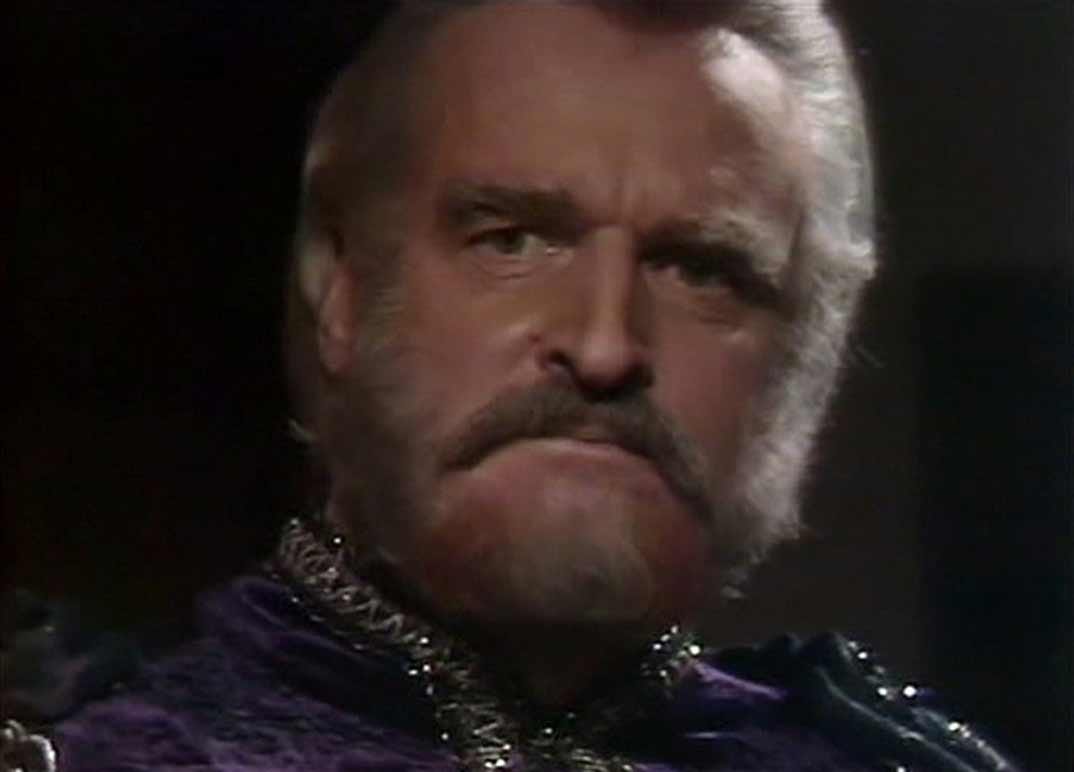
Hepesh, the High Priest of Peladon, is the ultra conservative uncle of its youthful, progressive king. He is desperate to dissuade the king from taking Peladon into the Federation.
Hepesh worships an ancient god, Aggedor, which of course turns out to be a false god. Moreover, Hepesh is engineering murders (including of his own brother) in order to frighten the king into keeping Peladon independent.
I can imagine a defender of this story saying that it isn’t biased, because the idea of national independence is shown on-screen, embodied in the character of Hepesh. But that is exactly the problem. When you have made the only visible representative of an idea also a liar, a superstitious and fear-ridden fool, a corrupt schemer, a murderer and a fratricide… it is rather difficult for the audience to take his worldview seriously. You have primed them to dismiss anything he espouses. Indeed, the more vehemently he holds a belief, the more instinctively they will reject it.
As a side-note, this story also has the reappearance of a species from Doctor Who’s past.
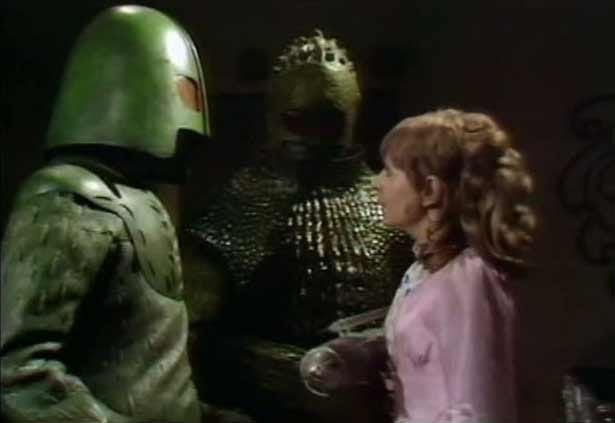
When last seen, the Ice Warriors were a war-like and xenophobic species. Now, though, they have become enlightened. As emissaries of the Federation, they proclaim:
We were once [war-like], but now we reject violence - except in self-defence.
Ah yes, “muscular liberalism” like we would later see in Star Trek, when Picard fought the Borg.
When asked why their ambassador is defended by an armed guard, they explain:
Unfortunately, in order to maintain peace, it is necessary to survive.
It sounds like a CNN anchor: “Though we abhor imperialism, we must have the ability to defend our way of life, our rules-based order, our democracy.”
The implied argument is: if even a race as aggressive and jingoistic as the Ice Warriors can become enlightened, surely we Brits can, too? In this context, national pride is implicitly equated with being aggressive and jingoistic.
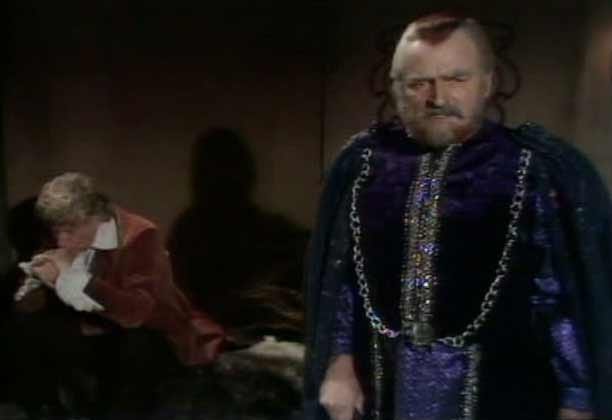
In a conversation with the Doctor during a desperate moment, Hepesh finally “opens up” about why he opposes Peladon joining the Federation:
Because I’m afraid.
The Doctor - standing in for the liberal writer and the (presumed) liberal viewer - attempts to persuade:
Afraid of what? The Federation is your safeguard.
This is the benign idea of globalism and federalism: it means that each country will have a “safety net”. But Hepesh believes that is a trick:
That is not true. I know the Federation’s real intent.
The Doctor is sure:
The Federation’s real intent is to help you!
But Hepesh knows:
No. They’ll exploit us for our minerals, enslave us with their machines, corrupt us with their technology. The face of Peladon will be changed, the past swept away, and everything that I know and value will have gone.
Peladon has the vulnerabilities of an African country (“exploit us for our minerals”), not a highly advanced First World nation, but let’s overlook that and consider the second half of his statement, which the story presents as reactionary and blinkered. I would say every word of it has been vindicated by Britain’s experience of EU membership and globalism in general. Of course, this relates not just to the EU but the WHO, the WEF, the UN, and so on. Even now, post-Brexit, these bodies have learned nothing and remain absolutely determined to destroy whatever they can of every ancient culture under their control.
The Doctor tries to reassure Hepesh:
The progress that they offer isn’t like that.
Oh, but it is. And Hepesh is brave, strengthened by his faith in his people and homeland:
I would rather be a cave-dweller and free.
You might say that, in 2016, after 45 years in the EU, the British public agreed with Hepesh. But of course, we were never going to be cave-dwellers, and the public knew that in 1972.
This possibility of impoverishment, like so much of the allegory in this story, depends on Britain being depicted as a primitive planet that could only gain by federating. It would be more accurate - and also more patriotic - if Peladon had been an advanced planet that could only lose by federating.
Instead, the desire to love and value and preserve your homeland, as Hepesh does, is presented as fearful, superstitious and backward-looking.
As he dies, he says:
I wanted to save our world, to preserve the old ways. Perhaps I was wrong. I hope so. The future you set so much store by, is yours now.
In the real world, that future didn’t last long, and in its short life it destroyed Europe. What we found was that the Federation did indeed exist to dominate, browbeat, threaten, weaken, homogenise, castrate and annihilate, to whatever extent it could, every “member state” that submitted to it. The very goal of the project, from the outset, was global homogeneity and centralised control, based on technocratic hubris, loathing of tradition and contempt for people in general.
It is exactly as Hepesh said. A liberal writer unwittingly gave his “superstitious fool” more wisdom than everyone else.
This trick (the dishonest allegory) is actually really widespread and a powerful tool to get the midwit masses. It is easy on the brain and therefore, once it has been accepted, replaces the original complex view of reality and the person only thinks in terms of the fiction. Hence "Harry Potter" signs at protests and such.
Ah yes, Hepesh the 'Little Englander.'
It is a typical leftism to see any unwillingness to submit to their vision as 'irrational fear.' Well, some fears are justified. "All we want to do is absorb and enslave you. Why are you afraid?"
Progress isn't always progress. This story's Federation featured non-binary Alpha Centauri and the peaceful Ice Warriors. They should have invited the Daleks too for a a touch of parody. Then again, maybe Terry Nation saw the story and re-used the name 'the Federation' for his totalitarian regime in Blake's Seven.
I'm not sure how the character of King Peladon should be seen in this story. He seems good-hearted but a bit weak and naive, perhaps like a British liberal of the 1970s. His ancestors might well suffer the results of his naivety. But in 1972 when this story came out, British people could still be complacent about their place in the world. If the writer of 'Curse of Peladon' could see the Britain of 2026, as you suggest in your last paragraph, he might realise Hepesh was right after all.