

Joe 90 is a children’s drama series from the late 1960s in the spy/espionage genre popular at that time. It was made by Gerry Anderson with his team of highly-skilled model-makers and puppeteers, showing off the expertise they had gained through a decade of such work. It was the seventh, and penultimate, “supermarionation” series. There are 30 episodes, each of 25 minutes.
The premise is typically outlandish for an Anderson show: a 9 year-old boy is sent off alone on extremely dangerous missions with his brain implanted with memories and skills from numerous experts using a machine invented by his adoptive father. Yes, his father literally brainwashes him at the start of each episode before sending him off to defeat gangsters, terrorists and dictators. It wouldn’t be made today.
I don’t like Anderson’s other shows, but I love Joe 90. The reason isn’t just that I was introduced to it at a young age (my grandparents bought us a video of it, quite randomly I think); having had that entrée I could easily have “got into” the other shows, but I never did. Nor is it because by this time they had worked out how to have the heads be in proportion to the bodies, though that certainly helps. Rather, it’s because Joe 90 has a very small cast of characters, and each one is distinct and has clear relationships with the others. This might seem a ridiculous thing to praise, but the fact is, Anderson dropped the ball on this with all of his previous shows. They tend to have many “duplicate” characters - all the Tracey brothers in Thunderbirds, all the agents and all the “angels” in Captain Scarlet - which I find dizzying and confusing.
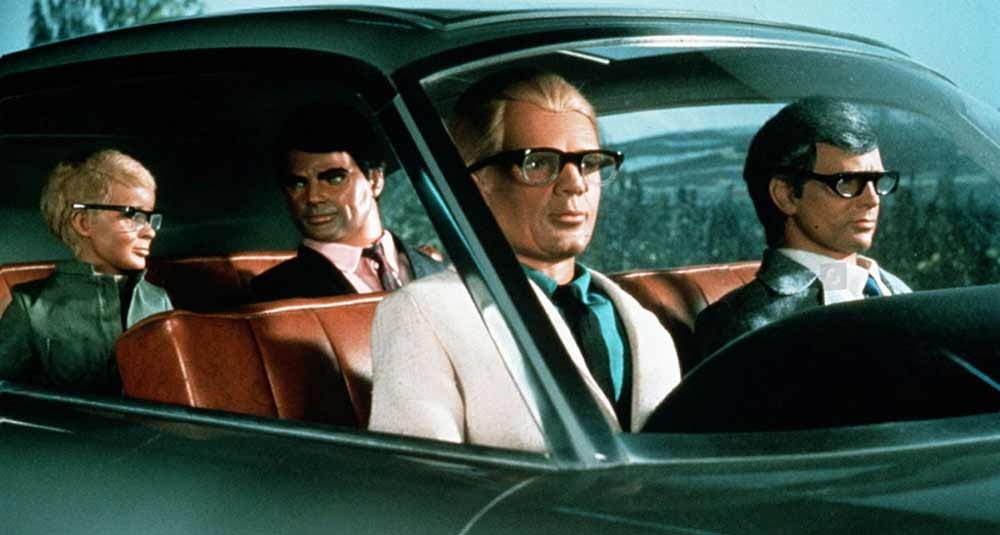
In Joe 90, there are just four people: Joe, his adoptive father Professor McClaine, his friend Sam Loover, and his boss Shane Weston. Thus, the show has an intimacy and calmness to it, and there is a camaraderie between the four which really “chimes”.
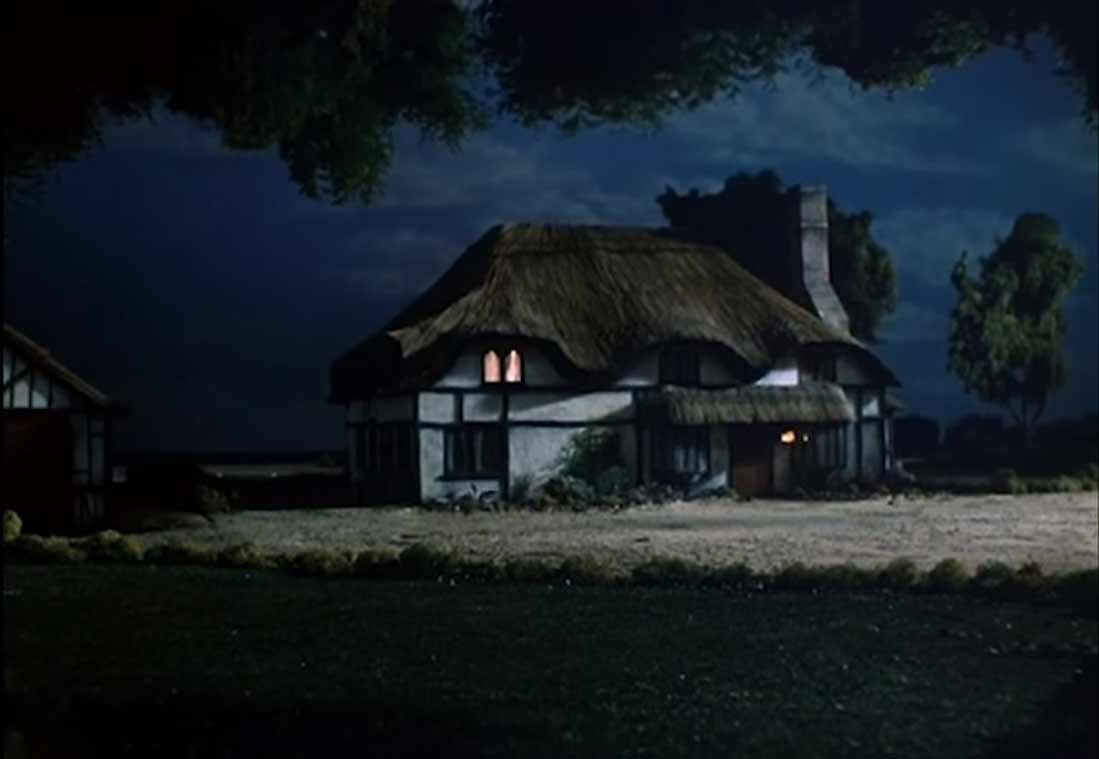
The cosiness is aided by the main setting, the house where Joe and his father live. It is an archetypal English cottage, rendered in adorable miniature:
This is countered by the steely modernism of Weston’s office, where business is often discussed:
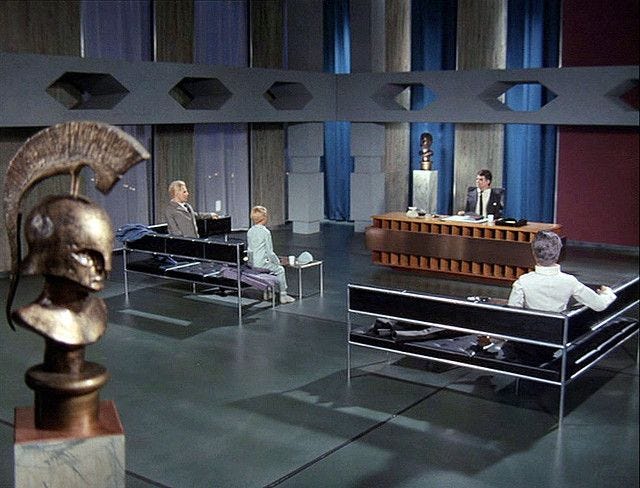
Weston and Loover are directors at WIN - the World Intelligence Organisation. Prof. McClaine is an associate of the same, and young Joe becomes its “most special agent”.
What we have here is White men being competent, brave and honest. Each man has a role to play in the world, and he does his duty. These men have emotions, but they keep them under control. They are upset only by things that happen, not by ideas or personal demons. In the course of growing up or professional training, demons have either been defeated or consigned to a locked box so that they cannot prevent the man from doing well in life and helping the people around him.
On occasion, such as in the episode Talkdown, we encounter a man who has not defeated his demons, but this is not seen as a terrible mark against him, just as a burden that he must be helped to overcome so that he can do good in the world.
This is an extremely wholesome show. The moral lessons are not hammered home, but they are present in the actions and attitudes of the characters.
In this future (around 2012) the Cold War is long over and Russia is an ally of the West. But outside the West there is barbarism and dictatorship, poverty and superstition. WIN’s job is to intervene in these foreign lands to keep them relatively peaceful and honest - and to prevent these dusky scoundrels from making nasty little attacks on the West, which is idyllic.
21st Century Britain is depicted as a haven of peace, civilisation, friendliness, and good taste. Its people (entirely White) are helpful, polite and civic-minded. Things are looked after. Things are done properly. Yes, in the far-flung corners of the world there is tyranny and dysfunction and corruption, but here in Europe and the Anglosphere, we have a good way of life.
It being Britain, class is part of this formula. Everyone knows his place and is comfortable with it. But also, you occasionally see an educated person with a broad regional accent, indicating that, in this perfect future Britain, a talented man is enabled to thrive no matter his origins. But also, he knows how to thrive: it means embodying high culture, not gorging on vulgar trinkets.
As for Britain geopolitically, its Empire has clearly dissolved and it is subservient to America (as indicated by WIN being led by Americans) but it remains important, influential and well-respected on the global stage. Internally, this future Britain is a hive of shopkeepers, farm workers, small businessmen, diligent scholars and inventive scientists.
This is Britain as a thoughtful 1960s conservative would hope it would become in the next 50 years: a hi-tech post-industrial country, proud of its past but looking to the future; a land where the rural idyll has been recovered, but without sacrificing the gifts of science. As Prof. McClaine says:
That’s the way we like it, Sam - a combination of the old and the new.
All of the music - theme tune and scoring - is by Anderson’s regular composer Barry Gray. What a talent! He contributes a key ingredient without which the show just wouldn’t be the same, setting the tone right from the Century 21 sting that opens each episode.
Shot gleamingly on 35mm film, the show was rescanned by Network for Blu-ray. I haven’t gone for that because I don’t really care for high-definition, and also… I’m still chuffed with the fact that I got the DVD boxset for the ridiculous price of £10 in an HMV sale, back in 2005.
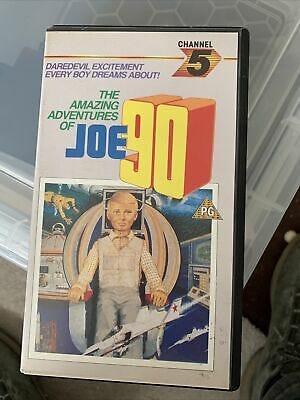
The VHS my grandparents bought had the slogan:
Daredevil excitement every boy dreams about!
And it is. If you have a son, and he is young enough not to have been spoiled by modern CGI, show him Joe 90.
My recommendations
This is superfluous because there aren’t really any bad episodes. However, for the sake of it…
Most Special Agent
This is the opener, which establishes the premise and is thus “necessary viewing”. Aside from that, it has an impressive destruction sequence where a military base is levelled, and also an exciting sequence at the start demonstrating Prof. McClaine’s flying car (note the wonderful shot of the wheel touching down on tarmac).

I absolutely love this evocation of the Arctic - some little piece of water, bounded by ice floes, with a vertical ice sheet as a backdrop. It is all so simple, but beautifully done. This is the kind of thing you get aplenty in the show. Of course it doesn’t look realistic, but why would you want it to?
Breakout
This is a lovely (but surprisingly violent) episode set in Canada. What’s interesting, viewing it today, is that Canada is depicted as having a distinct culture of its own, and it is recognisably Anglo. This unique culture, incidentally, allows for the appearance of a charming log cabin set:
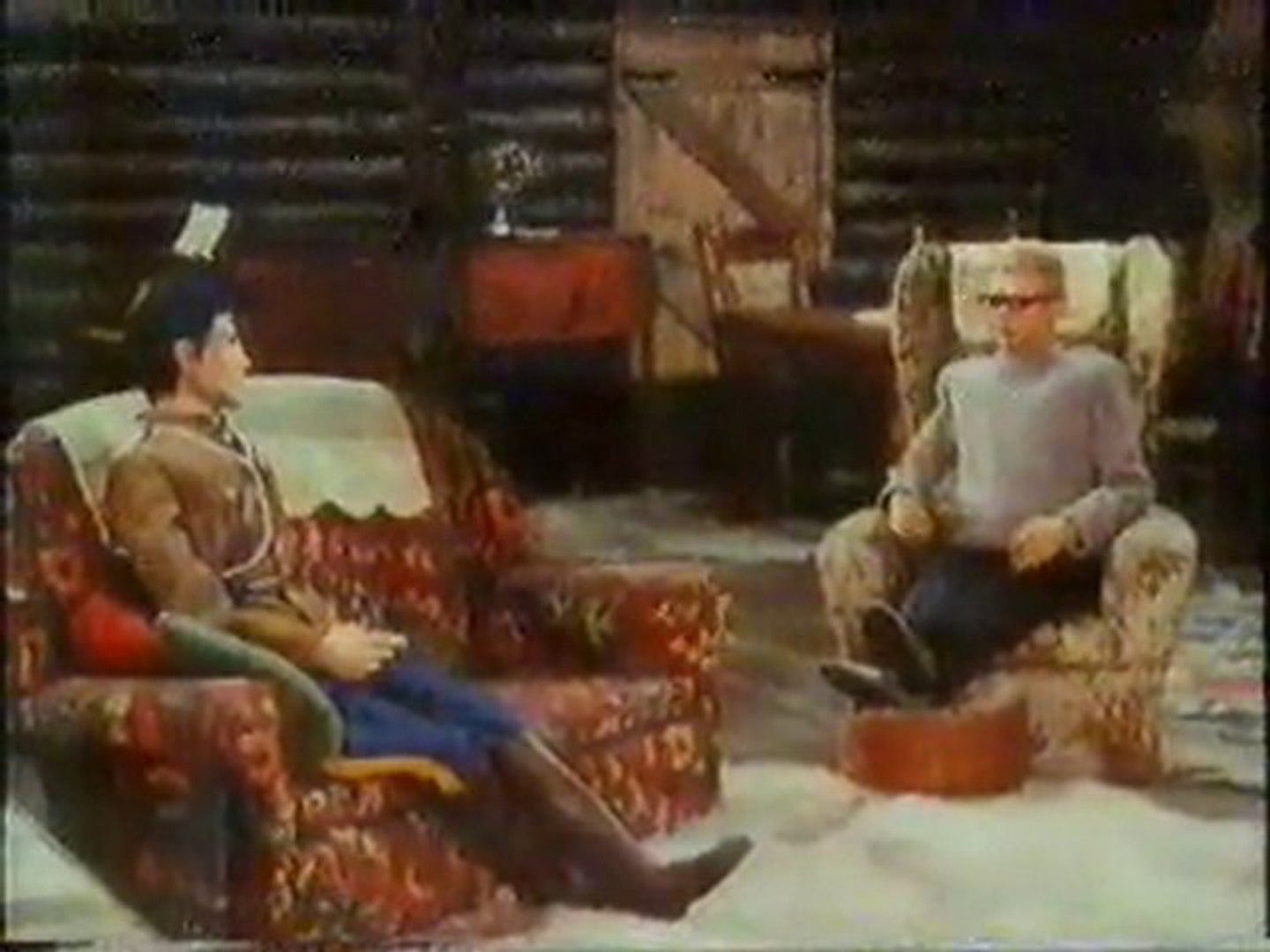
Note the Canadian official, dressed in national garb. Being an educated Anglo man, he is stoical, helpful, efficient, well-informed, and not corrupt.
Project 90
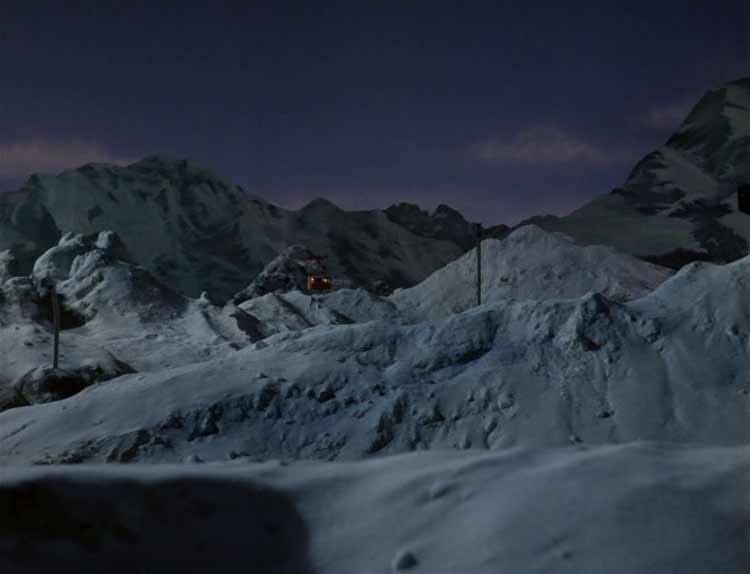
This is an exceptional episode. Every aspect of it is better “than it needs to be”. It’s as if everyone involved is going the extra mile - not least Barry Gray whose score here is outstanding. On the visual side, I love the rendition of the Alps, especially at twilight. Things this beautiful don’t need to exist.
The Professional
This episode is very tense and culminates with an escape sequence that is absolutely thrilling, and very technically impressive. I remember the first time I watched it, the climactic shot amazed me.
Colonel McClaine
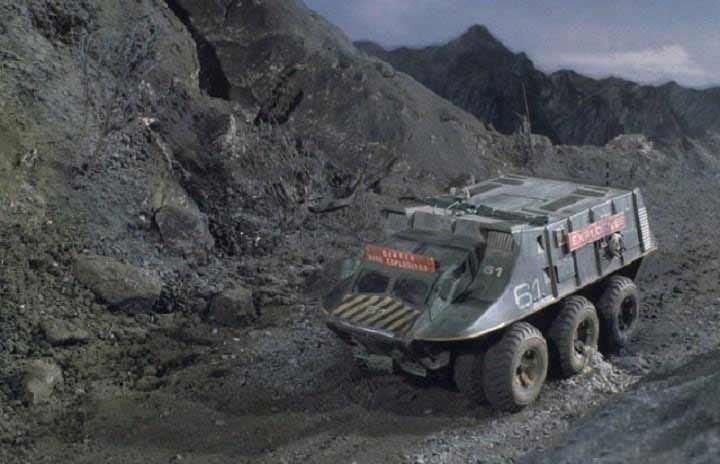
Another gripping episode, this sees Joe tasked with transporting highly explosive material across a rocky terrain. Very tense indeed! Also lovely model landscapes and cute chunky vehicles.
Episodes in strange locations
Child of the Sun God - the Amazon
Most Special Astronaut - space!
Touching episodes
Hi-Jacked
Relative Danger
Three’s A Crowd
Episodes with hilarious racial stereotypes
Using stereotypes for incidental characters is a thing done in all dramas, even today, for speed and convenience - but it’s notable here because of the national/racial aspect. This was a time when it was okay for Westerners to engage in “othering” - ie. to find something exotic. That was okay, because we were allowed to have our own perspective. In some episodes these stereotypes are especially prominent:
Big Fish (South Americans)
Child of the Sun God (Amazon tribes)
King for a Day (Arabs)
“Oddball” episodes
See You Down There
Lone-Handed 90
The Race
Episodes with female characters
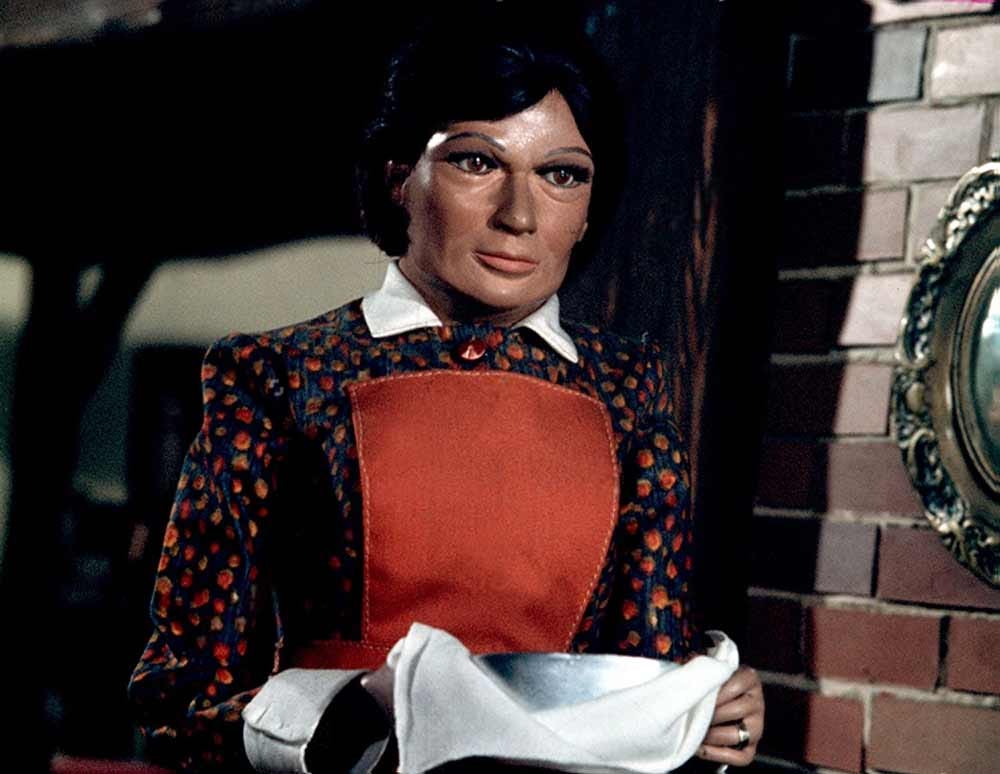
Women cameo here and there, but only two episodes have a key female character, and there is only one recurring (Mrs Harris, the McClaines’ housekeeper).
Double Agent - Mrs Harris
Arctic Adventure - Mrs Harris
The Birthday - Mrs Harris
Three’s a Crowd - Angela Davies and Mrs Harris
Viva Cordova - Dorina Cordova
What I would have liked
More of it! The formula just works so well, it seems criminal that a second season wasn’t commissioned. I’m sure it would have been every bit as charming and adorable as the first. Unfortunately, by 1968 the spy/espionage genre was going out of fashion, and Joe 90 was too different from its Anderson predecessors to capitalise on their popularity, so one season is all that was ever made.
After this Gerry Anderson made only one more Supermarionation series (The Secret Service, which was axed halfway through production) and then he moved on to other things. Joe 90 was less popular than his earlier series but, for me, it represents the peak of his ingenious (and very British) experiment with the craft of storytelling. With Supermarionation, Anderson and his technicians created something both unique and charming, and I believe Joe 90 is the best of it.
See my other TV guides here.
I've been reading several books by Agatha Christie, and she often describes very well the social "formula" that you mentioned which worked so well in the old Anglosphere. Except in her stories it was occasionally interrupted by a murder of course. :-) Dame Agatha would be terribly distressed by the kinds of crime and other social disorder that we're now experiencing. She was very traditional and socially observant. Having traveled overseas a lot, she understood the strengths of Anglo culture, while also appreciating the qualities of people and cultures elsewhere.
These old books and TV programs always give me sharp pangs because of what we've lost. It's interesting how many younger people on X are intrigued by old film clips of people walking around happily in our big cities 100 years ago or so, amid beautiful architecture and gardens. It wasn't utopia, of course, but it was better.
Using an orphan boy to perform dangerous missions is morally questionable at best,
but as a young 70s boy I found it enjoyable if not as exciting as Capt Scarlet Or Thunderbirds.
The theme tune was very catchy, my grandparents recorded me attempting to sing it in 1974...