

(Note: this essay is part of a series.)
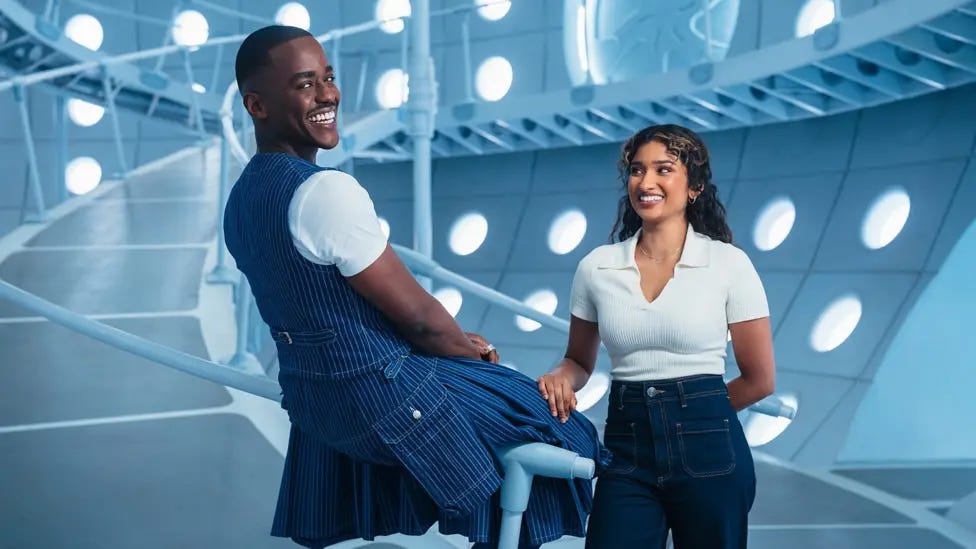
It is crucial to recognise that Season 2 was filmed before Season 1 aired, and written even before the 2023 specials aired. Therefore it was not, as many have assumed, a vindictive response to negative feedback.
Conversely, there was no chance to improve it based on that feedback (assuming Davies would ever have done that). This explains the rabid wokery on display, since wokery hadn’t yet been decisively rejected when this was written. There could hardly be a better demonstration of the folly of writing a TV show two years in advance of broadcast: it cannot respond to cultural change and ends up obsolete on arrival. As a result, Season 2 is 2023 preaching to 2025, un-self-consciously.
At this point there was still officially a chance that Disney would renew, if Season 2 fared better than Season 1. But that was very unlikely.
Apart from anything else, the Doctor’s companion would no longer be a cute blonde girl, but an Indian girl. In Britain, having a TV show without any White leads is asking for commercial death.

Any sensible person would predict that fronting a sci-fi show (of all things) with only non-white actors would fail. However, back in 2016, as he was embarking on the wokery that scuttled his own tenure, Steven Moffat adventurously (and self-contradictorily) opined:
Two non-white leads would be amazing. In fact, a lot of people would barely notice.
Moffat might have been thinking, as per his infamous remark about blackwashing history, “by believing in it, we’ll summon it forth”. Well, now that notion would be put to the test.
More importantly, this casting completed the process of detaching Doctor Who from the White British boys who had, for sixty years, identified with it and been its lifeblood. I am sure many of them wanted to watch Season 2, but found themselves unengaged by it, perhaps without understanding why.
(Davies antagonised fans by saying he would like, in future, to cast Viola Davis, a Black American woman, as the Master. That would be a “hat trick” of three non-white leads.)
There would be increased diversity behind the camera, too. Davies had previously said:
I’m aware that we haven’t got enough women writing or writers of colour, which we’re fixing in the next series to come.
In January 2025, the four writers were revealed:
Pete McTighe - a gay White man, a leftist who abandoned X for Bluesky. He is the only one of the four to have written for the show previously (two badly-received episodes during the Chibnall era, and co-writing a five-episode spin-off series with Davies)
Inua Ellams - a leftist Black poet
Sharma Angel-Walfall - a Black lesbian married to a White woman
Juno Dawson - a White transgender gay man
25% female, 50% Black, 75% gay, 25% transgender. Davies was certainly delivering on his promise to diversify the show. As for those fans who, back in 2005, insisted he had no “gay agenda”, I hope they are now eating humble pie.
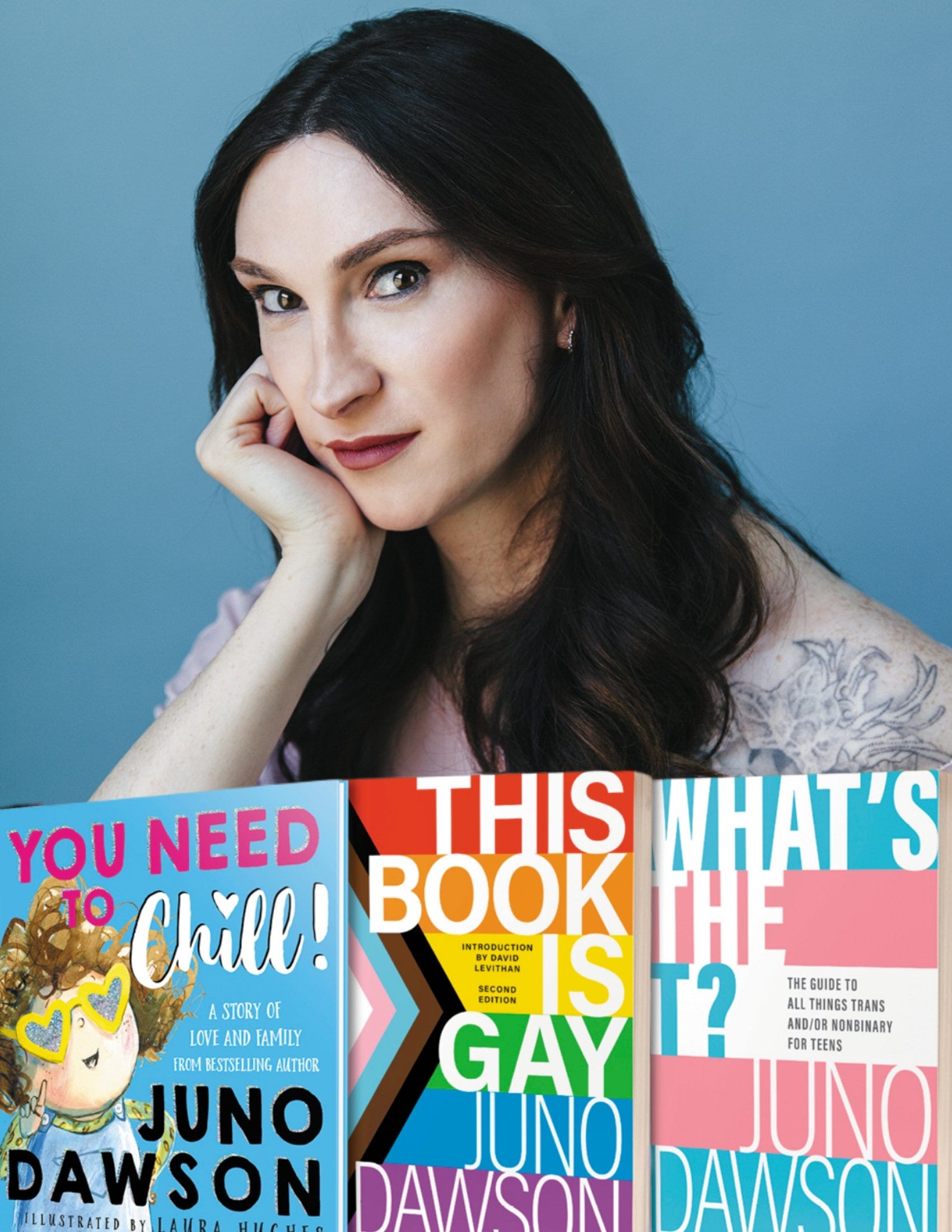
Juno Dawson came with particular baggage:
a writer of books for children, he has included in them advice on anal sex, oral sex and sexting. For this reason, one of his books has been banned in various US states.
on Twitter in 2020, he cyber-bullied a 14 year-old girl for opposing the Stonewall organisation
some critics called him (a gay man) homophobic for saying that gay men want to be women. They also claimed he had reduced women to sex objects. I personally don’t consider these criticisms valid, certainly not when compared with his apparent preoccupation with reaching children.
Everything else aside, this man’s obsession with sexuality and gender orientation is a world away from the writers of, say, 1970s Doctor Who.
With less than two weeks to go before Season 2 aired, new companion actress Varada Sethu celebrated the show being woke:
There’s been a couple of Doctor Woke [references] or whatever, but I just think we’re doing the right thing if we’re getting comments like that.
After all that had happened, after the way Season 1 had been received, it is incredible that Sethu would say this. Clearly, among the media, nobody dares to speak against wokery and most people - ambitious young actors - are still in full support of it. This blinds them to how their self-righteous remarks will be received by the general public, dooming them to alienate themselves.
It got even worse. Laughing, Sethu recounted what Gatwa had said to her about being a non-white duo fronting Doctor Who:
Look at us. We get to be in the TARDIS. We’re going to piss off so many people.
It is bad enough that Gatwa said this, but it beggars belief that Sethu was gormless enough to quote it publicly. It proves that Gatwa knew he was ruining something that means a lot to many people, and that he enjoyed doing so, as did his new co-star. Why should any long-time fan of the show, any White person even, give these two people any respect?
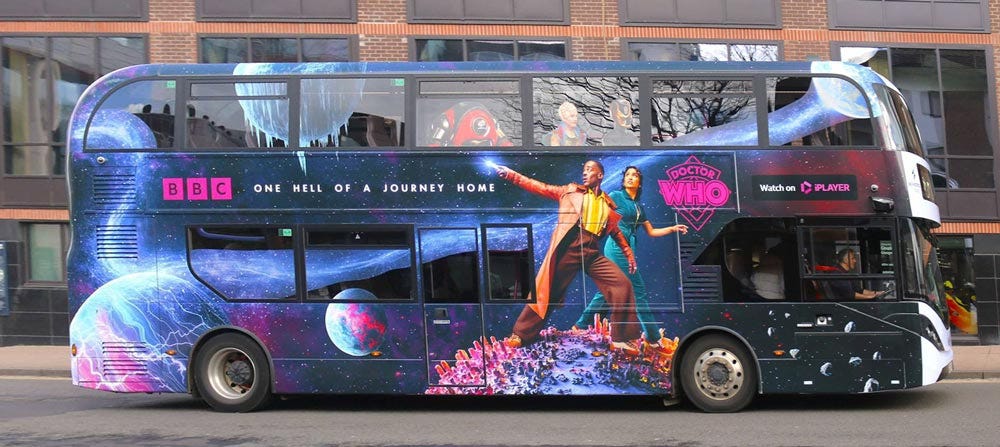
At the start of April, with cancellation rumours running wild in the run-up to Season 2, Davies reiterated that there were “no meetings, nothing” going on with Disney at the time and said he was “dying to find out” whether the show had a future.
Then, two days before broadcast, he was interviewed on children’s programme Newsround and dodged a question about the future by saying Doctor Who is an immortal franchise, because “no good idea ever dies”. However:
Sometimes there might be a pause, and during that pause, the viewers of Newsround now will grow up a few years and start writing stories and they’ll bring it back.
For the first time, he was acknowledging that the show might go on “pause”.
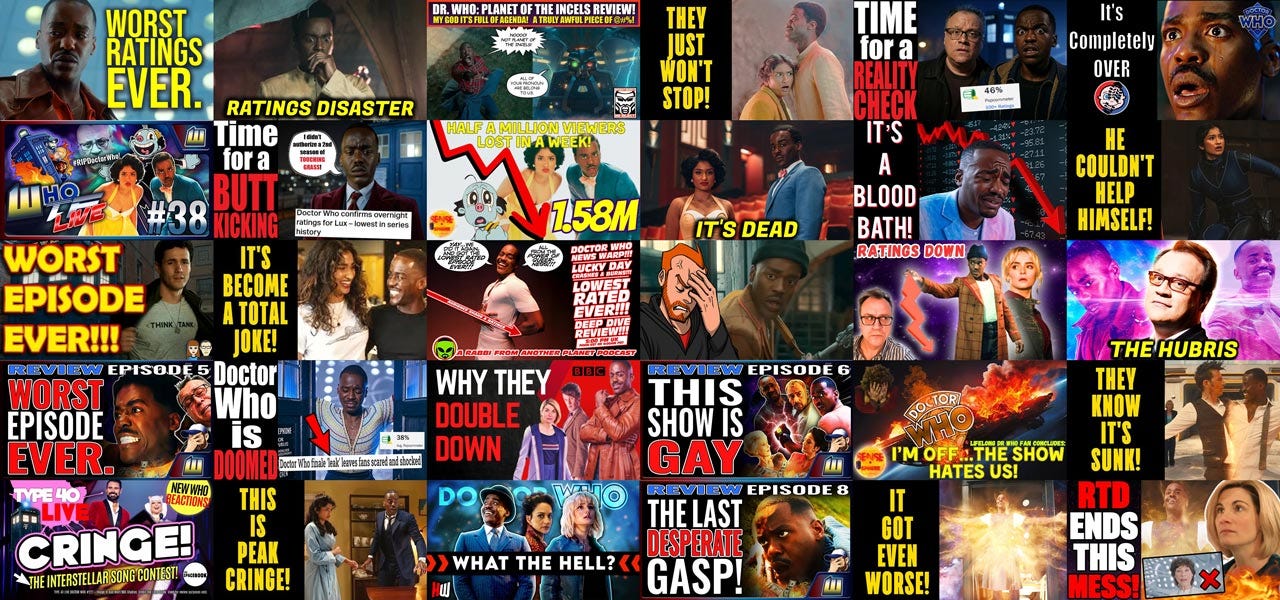
With Season 2 imminent, the mainstream media and Rotten Tomatoes once again closed ranks to protect the show. They had a fight on their hands; as the season played out, reaction online was incendiary:
The Robot Revolution
In the opening episode, the Doctor is wearing a dress and meets his new companion. Indian thirty-something Belinda Chandra is an extremely feminist “girl boss” - obnoxious, rude, unfriendly and ungrateful. As well as insulting, berating and degrading the Doctor, she preaches at him. Naturally, Belinda is shown having had a White boyfriend, Alan, and of course he was simpish and obsessed with her.
But Alan was a misogynist. Belinda left him because he wanted to place limits on her behaviour so that she would be a better wife to him. He later becomes the story’s villain, killing many people in order to force Belinda to accept him. The entire episode is thus an attack on (White) “toxic masculinity”, belittling men who are afraid of female power. Belinda even uses the phrase “planet of the incels”.
When, at the end, Alan is reverted to a sperm and egg which are then sucked up by an unthinking automated vacuum machine, the Doctor and Belinda laugh in mockery. This flushes sixty years of characterisation down the drain. The show approves of the Doctor behaving in this way: Alan was not woke and therefore was undeserving of sympathy. With all the self-awareness of the self-righteous, Gatwa and Sethu spoke of this episode as a “compassionate” exploration of modern male loneliness and the incel phenomenon.
To make things much worse, Alan is a nerd, into gaming and sci-fi. In other words he could very easily be a Doctor Who fan. Davies could have made him any sort of young man, but specifically chose to make him a nerd. Many people have assumed this was Davies’ revenge on the fans for disliking the RTD2 era. However, that cannot be true. This episode began production in October 2023, so Davies wrote it long before any of RTD2 aired.
The story’s entire thrust is about misogyny, sexism and “toxic masculinity”. Indeed, according to Sethu, there were many discussions about these topics during production. At most, Davies added some nasty touches to the script at that time, which is when fans were first hearing about the transgender Rose character and beginning to complain, but he couldn’t possibly have made Alan into a nerd this late on. That decision, to attack the show’s fans, was made by Davies before the fans turned against him.
At the time he was writing this script, the nerdy White male fans were mostly excited about his return as showrunner, and pumping up the RTD2 era that was soon to begin.
Whatever dismissive attitude Davies had towards “the fans” in 2005 had now mutated into a contemptuous loathing.
How fitting that this was the least-viewed episode of all time, with a 23% audience drop compared to the previous season’s opener. This boded very badly for the show’s future, since renewal hinged on good ratings. (Yet, on the day it aired, Davies was talking wistfully about seasons 4 and 5.)
Four days later he answered criticisms that Gatwa’s incessant crying was grossly unlike the Doctor:
You don’t tell an actor whether to cry, not to cry, not an actor of that [Gatwa’s] stature. Absolutely not. It’s like, you wouldn’t tell anyone to laugh or not to laugh! It’s a beautiful thing he does, and it’s a completely new thing for the Doctor, that opens doorways into whole new experiences.
Diversity is many things, and sometimes it’s putting emotions on screen you haven’t seen before, or that the Doctor has withheld himself from.
But it does make me laugh…. I know sometimes fans get up in arms about it and they complain about it. They’re the same fans who say, ‘Why don’t you do something new with the programme?’ and you’re like, hello.
He doesn’t seem to give any consideration to the possibility that the fans are correct. This continued the next day when he appeared on BBC Radio 2 and denied that he had made the show too “woke”:
Someone always brings up matters of diversity. And there are online warriors accusing us of diversity and wokeness and of involving messages and issues. And I have no time for this. I don’t have a second to bear [it]. Because what you might call diversity, I just call an open door.
He was claiming that the show is dispassionately open to anyone and is simply reflecting the British population. That cannot be true. Britain today is 17% non-white, but non-white actors are all over RTD2. Non-heterosexuals are just 2.2% of the population, while in RTD2 it seems more like 75%. There is no way this could happen as the result of a merely “open door”. Davies deliberately made it happen. He was lying.
Lux
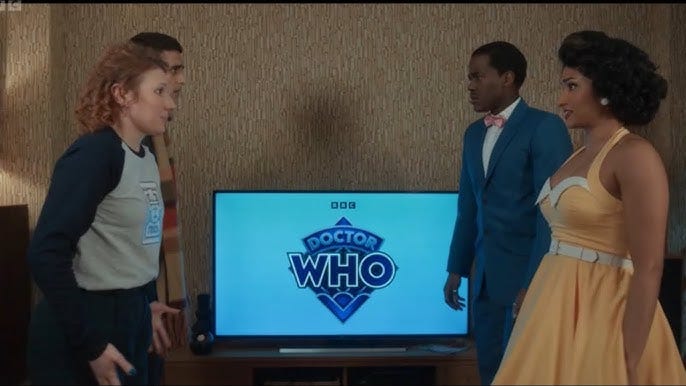
Season 2’s second episode, Lux, includes a virtual breaking of the fourth wall. The Doctor learns that he is a character in a TV show called “Doctor Who”, made by the BBC. The real-world logo, alongside the BBC’s logo, is shown on a TV. The characters even refer to a real episode, Blink, by name. All of this is eventually revealed to be a hallucination... but still, from the viewer’s point of view, the fourth wall has been broken, the show has gone “meta” and yet another limit has been dissolved.
Metro published (as far as I know) the very first MSM article condemning the RTD2 era.

It cited the record low ratings but also, crucially, the low writing quality.
The Well
The third episode was co-written by Davies and Sharma Angel-Walfall. It lacks the intelligent psychology, the creative wit and the production simplicity of the 2008 story to which it is a sequel, but nevertheless is well-written and involving, and is perhaps the only story in this season that is not offensive in some way. However, one notable thing is that it was originally going to be about African spirits (much like the other episode written by a Black person this season) and this was was only changed because Davies felt it was disrespectful to use figures from a real African religion as a Doctor Who villain. It seems his Black co-writer had no such qualms!
On the 30th of April, the Guardian published an article, “Is Doctor Who doomed?”, asking whether the BBC could justify renewing it given the low ratings.
Lucky Day
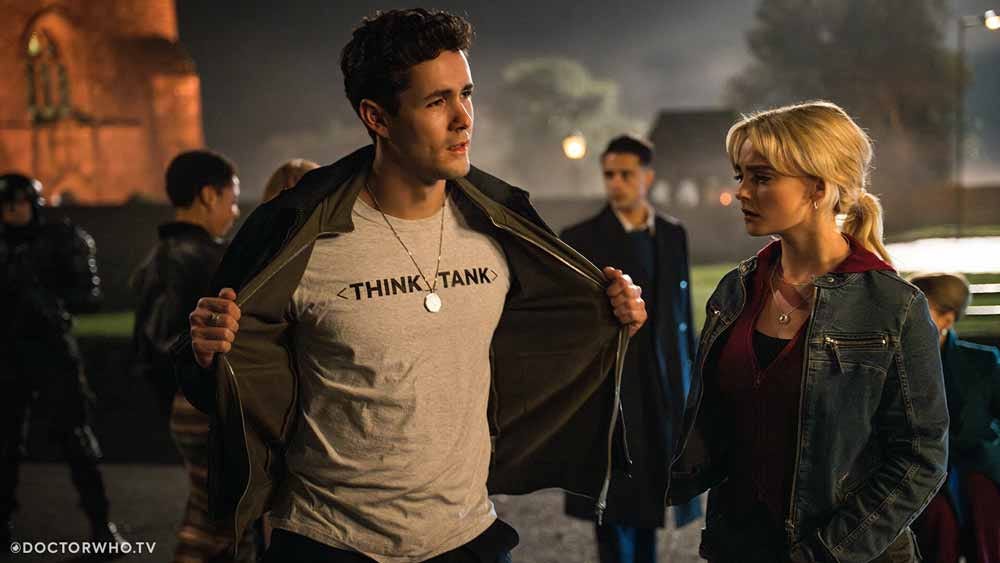
The fourth episode, written by Pete McTighe, further alienated the show from the general public while entrenching its progressive fans in their adulation of it.
Clearly written just after the covid period, this story demonises “anti-vaxxers”, “conspiracy theorists”, “hatemongers” and peddlers of “fake news” and “disinformation”, all of the bogeymen Hillary Clinton had named in her 2016 Reno speech. In the episode as in that speech, these various groups are linked (by the characters’ fixation on low taxes and by dialogue mentioning “Albion TV”, an obvious stand-in for GB News) with nationalism and the right-wing. For Clinton it was the Alt-Right, for McTighe and Davies it was Reform UK. The episode is also, like Clinton, paranoid about social media with its unscrupulous “influencers”. It feels very much like a mainstream media attack on alternative media.
However, its characterisation of right-wing influencers is not only crude and ignorant, it is inverted: they behave and get treated as, in real life, left-wing activists do (anti-social disruptive behaviour, smearing people, partial immunity from the law, sympathetic interviews on TV).
It is also very confused “in-story”. Given his own experiences, Conrad must know that UNIT are being honest about aliens so why does he dare them, on stream, to prove it and thus utterly discredit him? And why doesn’t his mole at UNIT, who must see every day that they are being honest, tell him that? Also, if he runs a pro UNIT podcast (“Lucky Day”), how don’t the followers of that know he also runs an anti UNIT podcast (“Think Tank”), and vice versa?
Of course, progressive Whovians didn’t care about these huge plot holes. They adored the episode. It “confirmed” their prejudices, made them feel wise and enlightened and sensible, and demonised their “out-group” as nasty, insecure, selfish, ignorant, dishonest, irresponsible idiots. It was essentially a wet dream for progressives, telling them they are good and their opponents are bad so they shouldn’t feel guilty about being full of hate towards them.
Unfortunately for progressives, the cultural hegemony they once enjoyed had expired. Outside their bubble, nobody shared their hatred for “right-wing” influencers.
Lucky Day’s thrust - total faith in the progressive neoliberal establishment and loathing for any who question it - could have “flown” in 2015 but by 2025 was completely “out of touch”. Once again, RTD2 showed itself incapable of acknowledging the modern world, and ensconced in obsolete presumptions from Davies’ heyday.
For the first time in Doctor Who’s history, ratings dipped below three million: 2.83m.
Even progressive journalists began acknowledging the situation. In Part 6 I mentioned a Metro article that smugly insulted “straight white men” who objected to the show’s new direction. Now, demonstrating how the winds had changed, Metro published a new article by the very same reporter:

What a contrast with a year earlier!
The Story & the Engine
The fifth episode was written by Black Muslim poet Inua Ellams. It sees the Doctor landing in Lagos and suddenly having a history of deep friendship with multiple Black people there, something that has never been mentioned before but is now said to be a huge part of the 15th Doctor’s life.
He says he feels “accepted” in Africa. Belinda doesn’t need him to explain; as an ethnic minority herself, she understands. “[They] treat you like one of their own?” He nods solemnly. She explains that her nan took her to India “whenever she could for the same reason”. Belinda felt accepted among her own ethnic group. The obvious question for this Black man and this Brown woman is “why don’t you leave Europe…?” Of course that question is never asked; instead White people are blamed for not treating either of these outsiders “like one of their own”. Likewise never asked is whether a White person would ever be treated by Africans or Indians “like one of their own”. Preferring one’s own kind is okay - even terrific - except when a White person does it. The messaging is entirely anti-White.
The rest of the episode avoids politics (except for a few inevitable comments about slavery) but is bad in other ways. Plot holes, absurd contrivances, unexplained things, very clumsy infodumping… The writing is simply dreadful. In addition it is a further drift away from sci-fi and towards fantasy.
On top of all that, the actors speak with thick African accents and, but for one small role in a flashback, there are no White actors in the episode whatsoever. British TV drama should not be like this.
Small wonder that it ventured even farther down in ratings than the previous episode, to 2.71m.
The Interstellar Song Contest
This is the most expensive episode ever made and is indeed an orgy of dazzling special effects. Trash 21st Century Western culture somehow survived the destruction of Earth and now, 900 years later, is enjoyed by many different alien species; the contest has three trillion viewers! Written by LGBT activist Juno Dawson, this episode is extremely gay throughout, full of men calling each other “babes” and “sweetheart”. Ordinary viewers are further alienated with cringe-inducing campery, an inter-racial gay couple and a mention of pronouns. There is even a cameo by Graham Norton (whom the Doctor says he met once at Brighton Pride). The whole episode also has a tedious moral message about racism. Ironically, it is actually very good in terms of plotting, characters, momentum and lack of plot holes (even if it does contradict earlier episodes in Season 2). If it hadn’t been for the needless wokery this could have been a very good episode. That said, in the final scene, female Timelord the Rani bigenerates into an Indian woman.
The Sun reported that, with Gatwa’s exit and no actor found to replace him, the show might have to be put on hiatus. The Standard also pointed to the low ratings and said the show might be cancelled altogether. All of this, including Gatwa’s exit, was denied by the BBC.
Then the Telegraph joined in, criticising the show and claiming that “only the BBC” didn’t know it was heading for failure.
Wish World
The penultimate episode is a barrage of woke storytelling. However, it does feature the RTD2 era’s second depiction of a normal nuclear family, and the first one where any of the members speak. The entire family is wiped out in the opening scene. Thereafter, the episode lampoons and demonises traditional social mores (the man goes out to work, the woman stays at home and her main role in life is child-rearing) even though these mores are exactly what make the opening scene (showing a family with many children) possible.
The fact that the Doctor’s companions leave him to “go and fall in love and marry and have babies” is mentioned, but by a villain - the misogynist obsessed with traditionalism who created the fictitious society shown in this episode. That this society is fictitious communicates to the young viewer that traditionalism and heteronormativity rest on delusion; that family formation is not for everyone so it shouldn’t be upheld as the social norm.
At one point, childlessness is celebrated by a female character (Mel). Yes, it’s a throwaway line, but these make an impression on young minds. Given the very low birth-rates in Britain today and how childlessness is known to psychologically harm women, a responsible writer would show Mel voicing regret about never having had children.
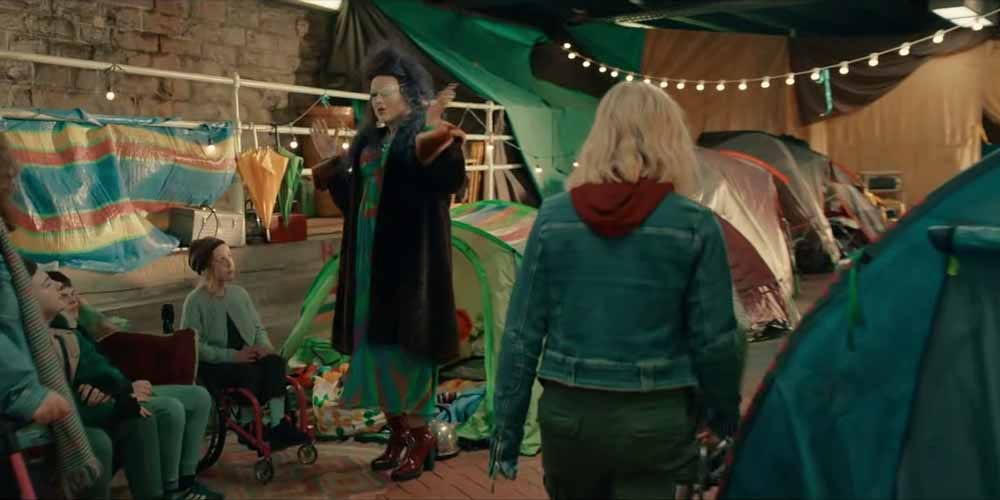
Furthermore, the episode characterises “non-conformists” as gay, trans, disabled, etc. This does work within the traditionalist society of the story, but is completely inconsistent with real 2020s Britain. (The Left can never accept that they have cultural authority and power; they must always see themselves as the underdog.)
Similarly, the episode champions the right to doubt social convention and received truth - yet Davies demonises anyone who doubts his favoured social conventions and his received truths. He does this multiple times in this season alone. He even includes a sly swipe at JK Rowling who disgraced herself by not being sufficiently pro-trans:
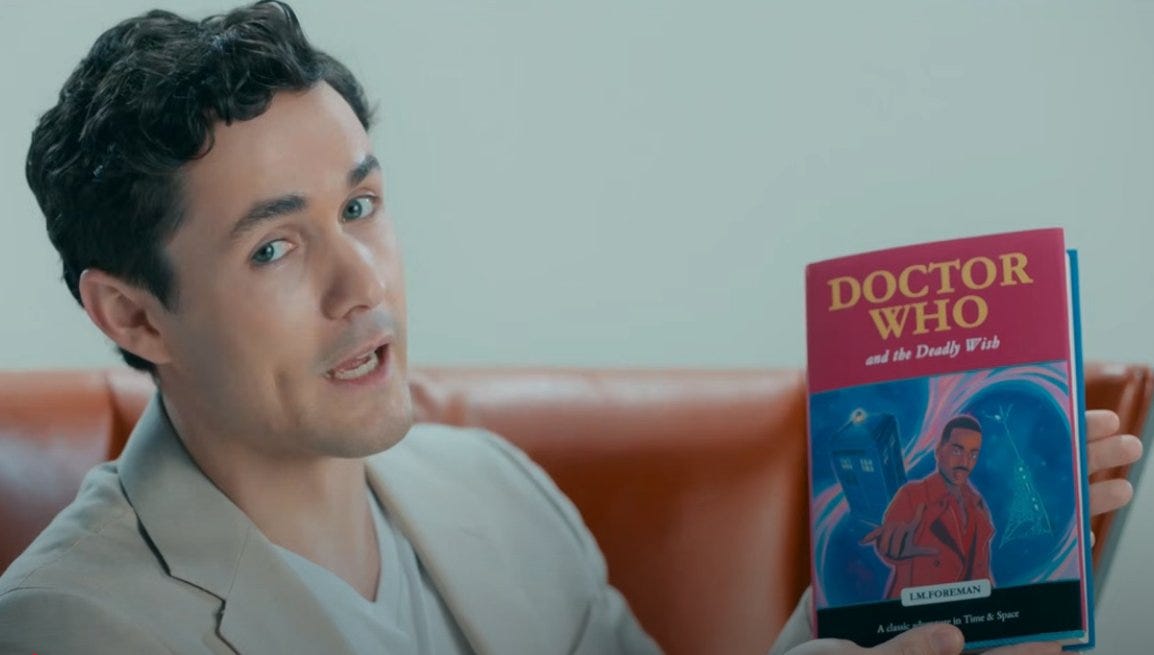
Especially with his sadistic treatment of Alan in the opening episode, Davies is exactly the cruel zealot that he caricatures.
On the 30th of May, the presenters of a show on BBC Radio criticised the preachy wokery of RTD2. This was significant because it was the BBC turning on itself - for the first time, a rupture in its resolve about the on-going debacle.
The Reality War
The finale of Season 2 is a sorry disjointed mess. To be fair to Davies, once Gatwa jumped ship he had to completely rewrite the second half to show the Doctor dying and regenerating. The result isn’t what Davies had intended. He was having to improvise.
However, even there, he made a reckless, selfish and catastrophic decision. Seeking a headline-grabbing cliffhanger, he had Gatwa’s Doctor regenerate into Billie Piper, a “fan favourite” companion from 2005:
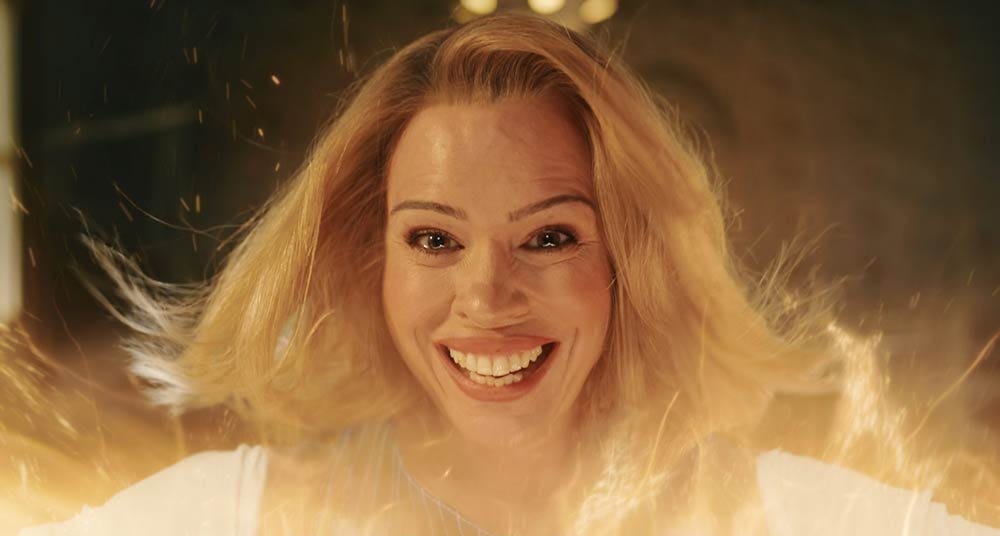
This was bizarre. Nothing like it had ever happened before in the show’s history. Nobody understood how it was going to be resolved, or when, or indeed whether the new character actually is the Doctor. Even the show’s loyal ultra-progressive fans were disgusted at this naked “stunt”.
A leaker soon revealed that it was filmed very hastily just a couple of weeks before broadcast and was indeed a desperate ploy on Davies’ part to persuade Disney to renew their contract.
Unfortunately, all Disney cared about was ratings.
Ratings were even worse than for Season 1, down by about a million:
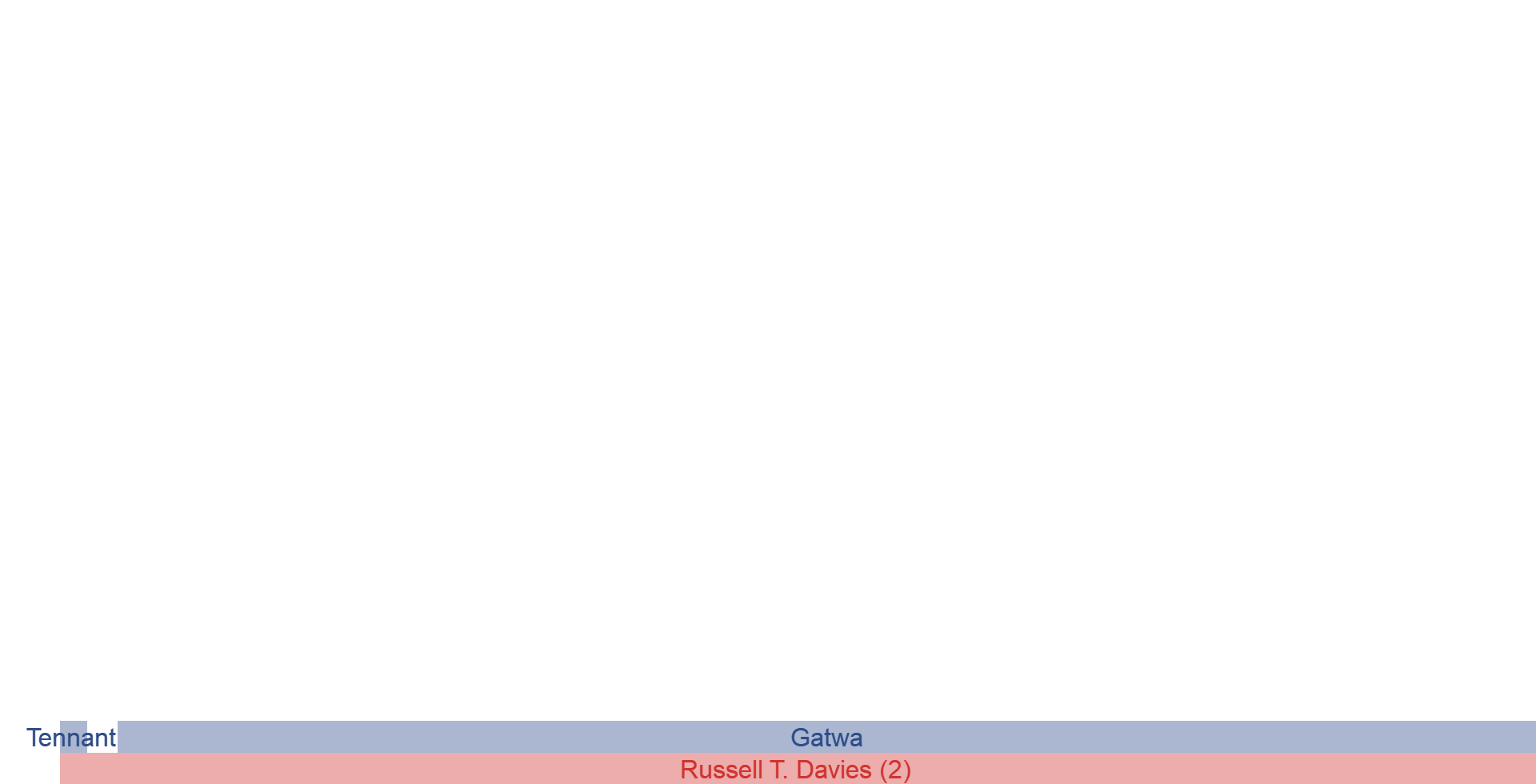
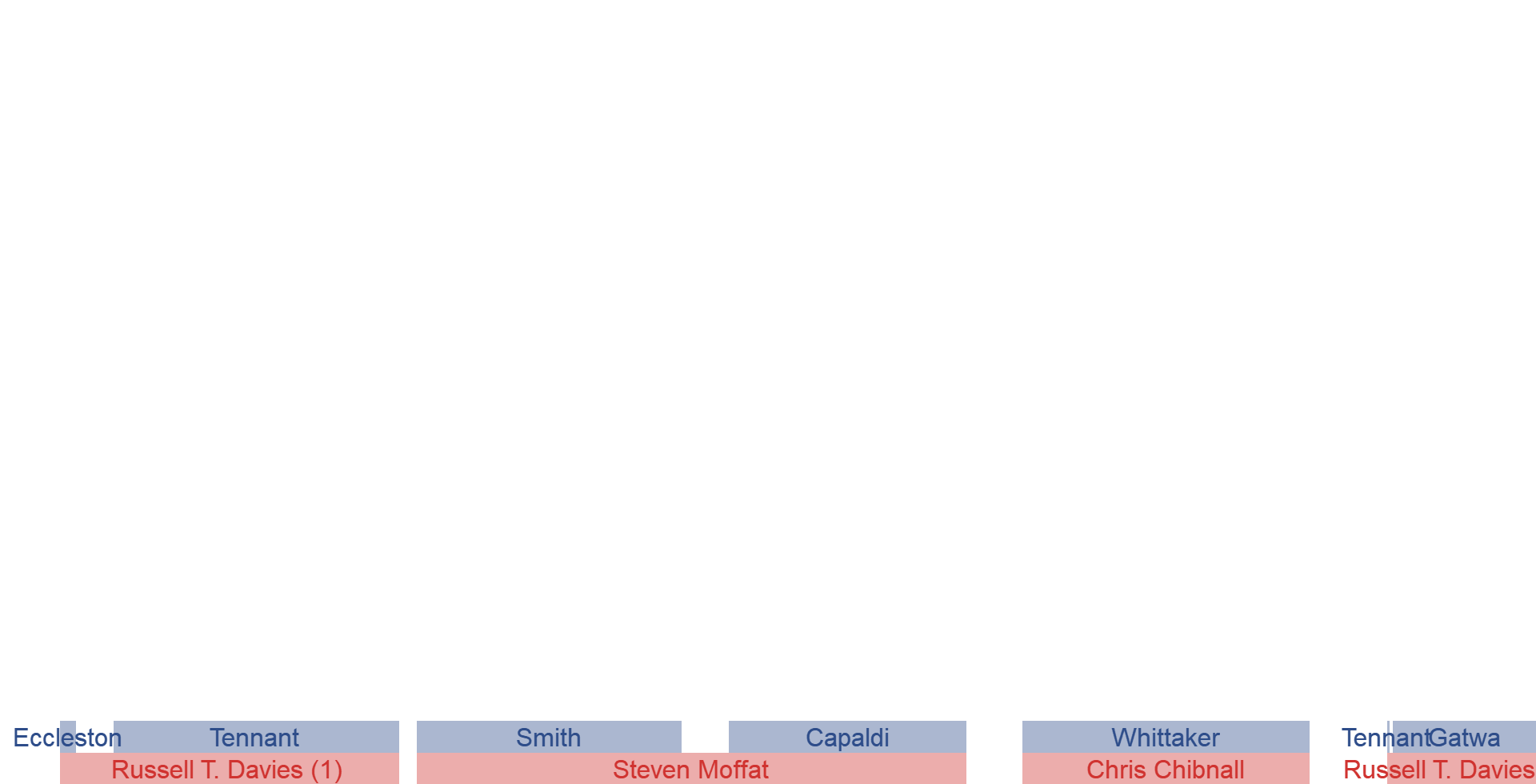
To grasp how bad this is, one must look at the entire revival, from 2005 onwards:
We can also compare Season 2 with the classic show’s final season, 1989. The latter is in purple and Season 2 (7-day consolidated) in bright pink:
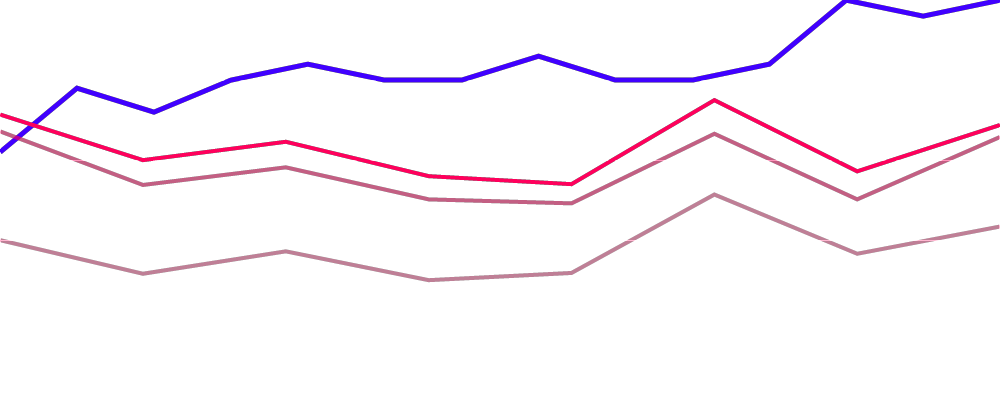
The averages are 4.15m for 1989 and 3.17m for Season 2.
Bear in mind, again, the massive advantage that RTD2 had over 1989 in terms of budget, time, special effects capability, professional writing experience…
Davies’ triumphant return had failed utterly.
Now began the slow, agonising collapse.
I haven't watched this series. I assume Woes forced himself to for the sole purpose of writing this article.
It sounds completely unwatchable. Russell Davies is a man so lacking in self awareness, and empathy for other points of view, that he doesn't realise how obnoxious he made Doctor Who. Will he ever realise or admit he made a huge mistake? No, due to his fanaticism and arrogance.
You mention the episode ending where the toxic straight white male regresses to a sperm and is vacuumed up, while the Doctor and friend laugh. This is the sort of vindictive spite on show from leftists in recent times. Apparently Davies expected the TV audience to laugh along with him.
You have gone to an awful lot of effort to analyse this drivel. I'm surprised you could be bothered.