


In 1800, Britain was a heavily class-based society. It was initially very binary - the peasants and the aristocrats - but in the early 19th Century, the new middle-class emerged. In time came finer gradations - lower-middle, upper-working, etc.
Each class had its own traits and mindset, but nevertheless, it is possible to speak in very broad terms of a single spectrum from low to high. (If this spectrum did not exist, the designated points along it would not make any sense.)
The culture had markers associated, if not with any particular class, then with some point on the spectrum from high to low. People knew that each thing they did - the mannerisms, the clothes they wore, the way they spoke - was associated with some level in the hierarchy, and either they accepted their level, or they strove to ascend, or they gave way to despairing downward (financially for them, culturally for their offspring). But the momentum was upward, because everyone understood that high is superior to low.
This system insulated the high from degradation and maintained the means by which the low could be looked after and stewarded towards higher things, or failing that, at least prevented from tearing down the library, the museum and the academy. Such an arrangement was necessary because there is wide variance of intelligence within Britain’s gene pool, which also has running through it a fierce individualistic streak which threatens any order that is not prized and protected.
Thus, the order was prized and protected. This was done by stratifying the gene pool. Classification was never as rigid as leftists would later assert, but it was deeply entrenched and it was replete with symbols. The way that a man asked you the time would provide you with a wealth of signals, which your mind would instantaneously combine into a single, and usually very definite, account of his social status. But this would already have been betrayed to you by his clothing, his gait, his facial features (or the way he held them), and even the way he obtained your attention.
If everyone respected this class system and accepted (or found) their “rightful” place within it, then order could be maintained. Culture could be shaped, morals enforced, the populace directed, and a high level of civility maintained.
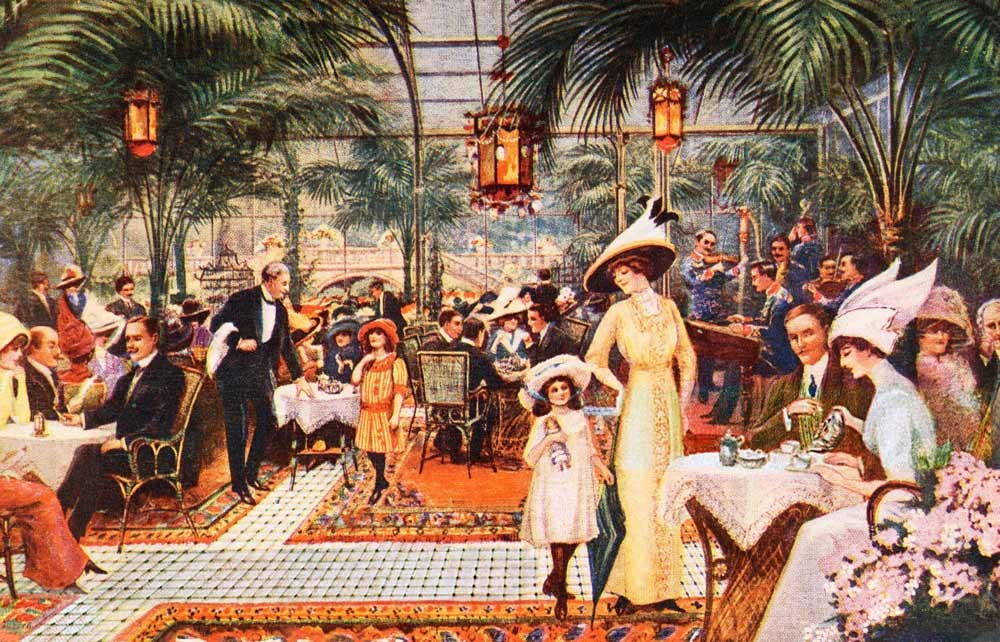
It also meant that culture could be categorised hierarchically. We could distinguish between good and bad.
Low-brow culture was scorned but tolerated for the working-class, since it was understood to be all that most of them could handle. But at the same time, public libraries were plentiful and helped any working man with intelligence and ability to ascend to some higher stratum. His origins might still be betrayed by his manner and accent, but not by his children’s, for they would grow up in a better environment than he had, and they would be - in every sense - higher class than him. He might know how to make money, but they would know Austen and Tolstoy, and perhaps even Milton and Chaucer; if he was gruff but able, they would be refined and comfortable.
Simultaneously, high-brow culture was recognised as such and valued for being such, and people were directed towards it whenever possible. It was understood to be largely the preserve of the educated and the upper-class, but if the common man could appreciate it too, so much the better. For the middle and upper classes, staying abreast of high culture was not always easy - by its nature, it demands effort and time - but they did so because they valued it and because they valued their own social status, which depended on appreciating this and being seen to appreciate it.
