


I started getting gallstone attacks in March 2013, at the young age of 31. The consultants were unanimous about the solution: remove my gallbladder. I reluctantly agreed and was scheduled for the operation, but cancelled after reading horror stories online about long-term effects. (Of course, these storytellers are self-selecting. If you get your gallbladder out and suffer no ill effects, you won’t spend time on Reddit dwelling on that fact.)
But, ill effects or no, it seems to me that removing a healthy internal organ must be a sub-optimal course of action.
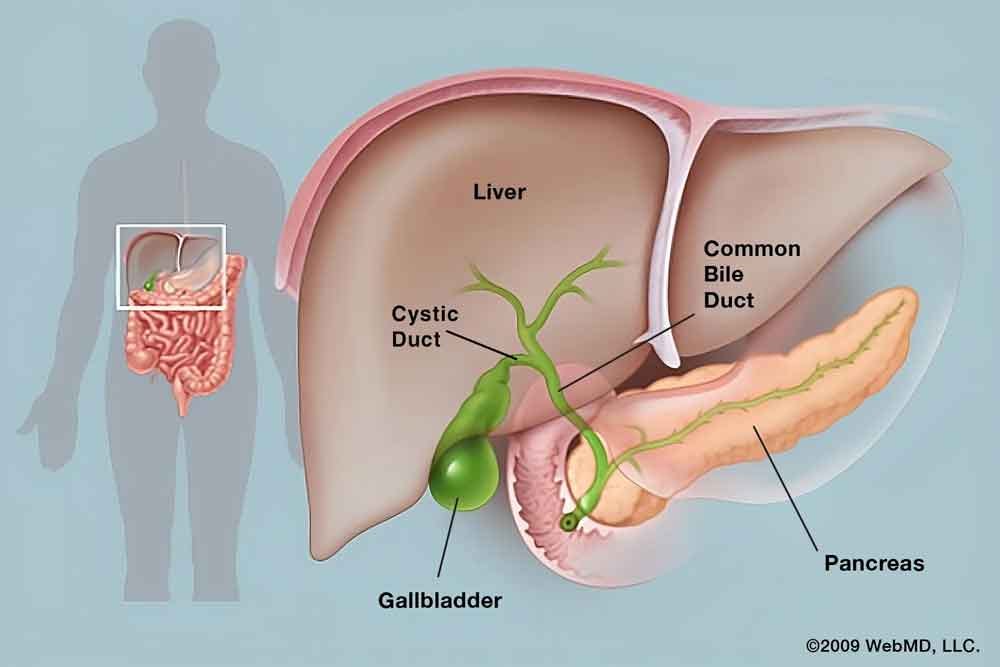
And, as I understand it, the gallbladder is healthy and doing exactly what it is supposed to do: storing gall (bile) produced by the liver, then contracting to squeeze it out into the digestive system as and when needed. The problem arises if the liver produces “bad” gall, which tends to develop into stones while resting in the gallbladder. When it then attempts to squeeze out its contents through the narrow “cystic duct”, one of those stones can cause a blockage. This, which is called “biliary colic” or “a gallstone attack”, can be unbelievably painful.
So really the liver is at fault, not the gallbladder, yet the institutional solution is to remove the gallbladder. This leaves the patient with an incomplete digestive system. Whether that actually matters is apparently unique to every patient. Some don’t notice any difference at all, some do but are glad to be free of the attacks at whatever price, some bitterly regret having it done. (A porter at the ERI, wheeling me to the ultrasound in 2013, told me he regretted having it done.)
Yet the consultants will tell you there are no ill effects at all. If you challenge them, they are perplexed, then annoyed if you persist, then contemptuous when you say you read something online.
I think this attitude among consultants stems from the time the NHS was formed, in the much more hierarchical and patrician Britain of 1948, as well as a general history of medicine being an upper-middle-class profession. Doctors in Britain, especially surgeons, were traditionally posh, well-educated men dealing with a feckless and ignorant working-class, and a dutiful and obedient middle-class. Historically, neither of these classes would dream of questioning the pronouncements of an educated man, especially in his own field of expertise. They knew their place. If little Jimmy was told he had to lose some body part, his mother - whether working or middle-class - would think “who are we to disagree?” and “we should be grateful that better people care enough about us to give us this advice and treatment”.
But eighty years later, things have become more fuzzy. Ordinary people have much more agency, due to both the collapse of deference and the much wider availability of information. We still want to respect trained doctors, but we find ourselves on an increasingly equal footing with them. (This problem was actually the subject of the very first MW video I ever filmed, The Learned Physician.) But the consultants haven’t caught up with this new reality, and I suspect are still trained with a now-antiquated mentality that you have to simply tell the hoi polloi what is good for them, and browbeat away any objections they raise. Now, to be fair, in most cases this is probably still true; despite technology and social conditions, people remain people, and biology remains very complicated. But in this new age consultants should adapt their approach when speaking to someone as intelligent as them - which must happen quite frequently, after all - because that person may also be highly informed on the medical condition being discussed. But they don’t. Instead, all patients are treated the same. I think this is due to, not the socialistic origins of the NHS, but the elitist nature of doctoring. In a country with Britain’s heritage, that profession gets mapped onto the class system, finding in it the vocabulary with which it will operate.
As such, ironically enough, the NHS now stands as one of the last examples of institutional classism in Britain. The trouble is, as with any class system, that the intelligent get treated like the unintelligent simply because of the class categories they find themselves in. And in the NHS, the class categories are “trained” and “untrained”, with the untrained presumed to be basically cretinous.
The 2013 attacks were the worst, in both frequency and severity. The third, in May, was so excruciating that at one point I was frozen still, unable even to speak. Then in August there was a spate of attacks; for a two-week period I was nigh constantly on either morphine (in hospital) or codeine or tramadol (at home).
That year was when I learned about all of this - the various tribulations of an attack, the stupendous bliss of morphine, the alternative treatments (including chanca piedra, pectin, and the disgusting experience of drinking cider vinegar). And of course, I became familiar with the arrogance of British medical consultants. Every single time, they talked down to me and tried to get me scheduled for gallbladder removal.
Oddly enough, both socialised and private healthcare are motivated to remove it. The private providers can charge more for an operation than for palliative care. The socialised providers potentially save resources by pre-empting future attacks, and at any rate can claim to have definitively “cured” a patient only if the potential for future attacks has been eliminated. So both systems incentivise their staff to push for removal. Patients are told the attacks will worsen, become more frequent, and never stop. Having rejected this advice, my experience turned out be very different.
By the end of 2013, I had begun taking supplements that claim to dissolve gallstones. I would stay on these for years.
In 2014 there were far fewer attacks. 2015 was similar. I had started my channel and in several videos you can see I still have the hospital band around my wrist from an “incident”.
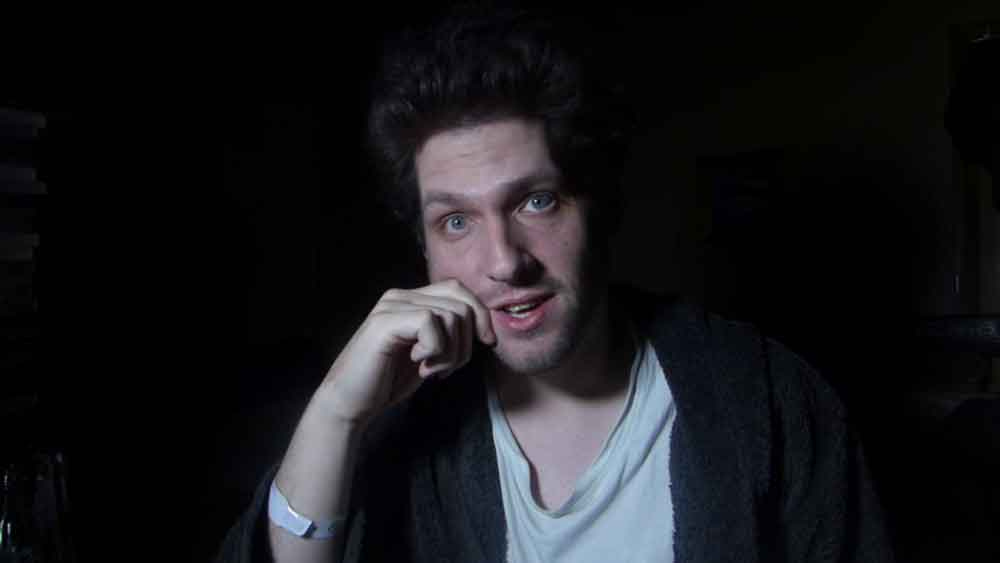
There was a surreal episode in 2015. Late one night, alone in the house, I had an attack and was ambulanced to St John’s Hospital in Livingston but only had my shoes, trousers and dressing gown on. Worse still, I forgot to take my mobile phone. Discharged at 4am, I had to get home somehow. I eventually got a bus, but the wrong one, and ended up outside Kirkliston, walking through open countryside in my dressing gown at 6am towards the village, where I then stood for an hour waiting for the first bus to Linlithgow. It was utterly bizarre.
At the end of that year I had an attack that was short and therefore didn’t require medical assistance, but it struck during Millenniyule (in its inaugural year), postponing the “female edition” hangout. When finally on air, I came up with an amusing word-play, apologising for “a rocky start” to the evening, then “well, a stony start”.
In 2016, even fewer attacks.
They were becoming less frequent and less severe, perhaps because of the stone-dissolving supplements. By 2019 I think there were only one or two, both mild. Then none in 2020. Early in that year I made some lifestyle changes. As well as stopping smoking, I made a point of regularly eating exactly the “heavy” meals which trigger attacks. My idea was that this would ensure the gall was kept moving and thus not get a chance to form into stones. I put on weight, of course, but this seemed a worthwhile price to avoid attacks. I even stopped taking the supplements.
Thereafter, I had no trouble at all for six years. I thought I had found a solution which had eluded the medical establishment! (All I needed was to start exercising, to counter-act the weight problem…)
But then, on the 15th of July, 2026, completely out of the blue… a gallstone attack.
I was asleep when it started. In fact, the pain intruded upon a dream, distorting the conversation I was watching between two men. They started slurring their speech, making crazed facial expressions. I noticed they were disturbed, and then that I myself was disturbed: I felt an old, familiar pain.
Waking up, I knew instantly what it was.
On the right-side of the lower abdomen. A burning pain. Coming in waves - searing, abate, calm, resurgence - about five minutes between each wave.
Eventually the pain achieves a baseline level so that, even between the waves, you are in pain. Finding the posture that is least painful becomes your sole, intense concern. You have to lie on your left-hand side. But then what to do with your arms? Your legs? Thoughts of mortality snicker from the sidelines but are mostly drowned out by the sheer drama of what is going on.
I moved to the floor, back to the bed, back to the floor… (Being in bed is risky if you don’t have a basin to throw up in.) I took two painkiller tablets, but solpadeine, despite being the most powerful non-prescription painkiller, is futile against this.
I can’t remember much of what happened over the next few hours, except that it ended with me throwing up. And then, quite suddenly, it was over.
The attack had been not too severe, akin to most of the 2016-2019 attacks, those which hadn’t required medical assistance.
Afterwards, I made sure to keep my phone on charge in case I did eventually need to go into hospital.
I did some googling. What causes gallstones to form? They’re not quite sure, but it hinges on the gall being cholesterol-heavy, and it seems that the liver will produce such gall if you consume a lot of processed carbohydrates and refined sugar.
As for what triggers the attacks, I already knew that: fatty, “heavy” meals - pizza, cheese, etc. But I had been eating these without incident for six years. Indeed, just a few days before this I had ordered online a large chunk of elite gourmet parmesan, the best in the world. It had been over a year since I last enjoyed this so I had decided to treat myself. Bad timing.
I also googled about the long-term effects of gallbladder removal. Since 2013 the horror stories have become somewhat substantiated by “official” research. As in everything nowadays, the Chinese seem to be ahead of the West on this. Some academic in Beijing has amassed scholarly evidence that implicates the absence of the gallbladder in heightened susceptibility to a wide range of disorders, not just gastrointestinal but even reaching to Alzheimer’s.
